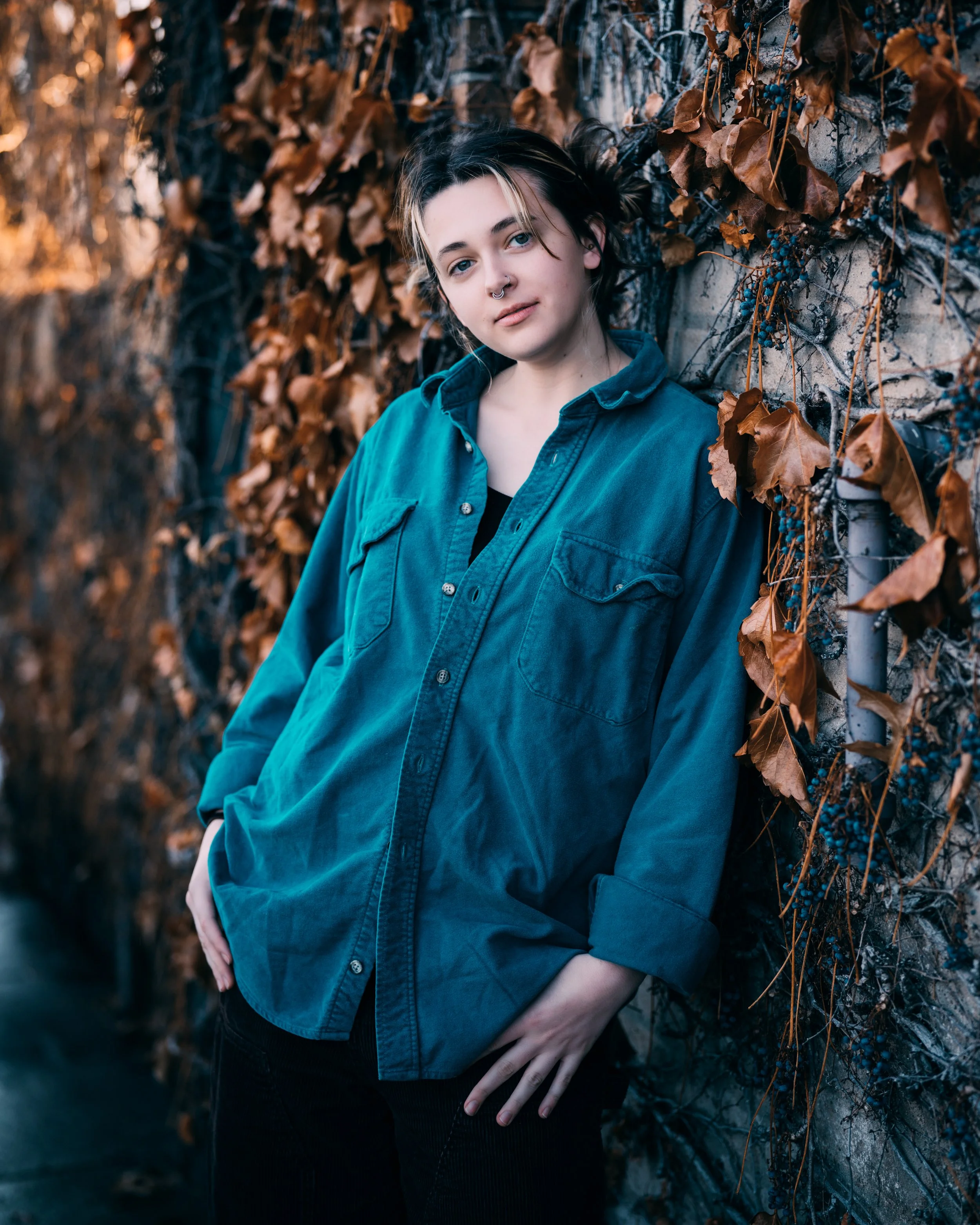
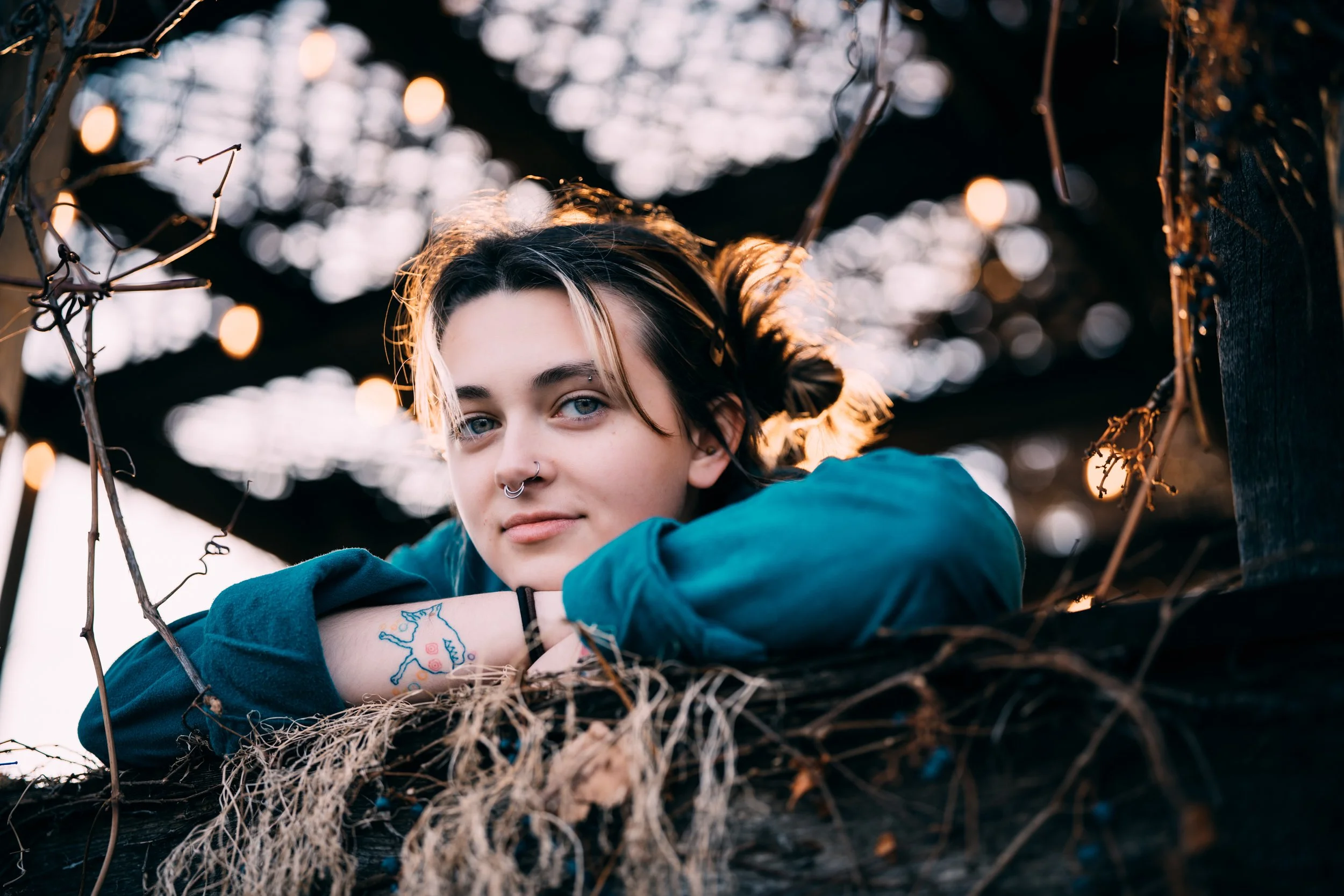
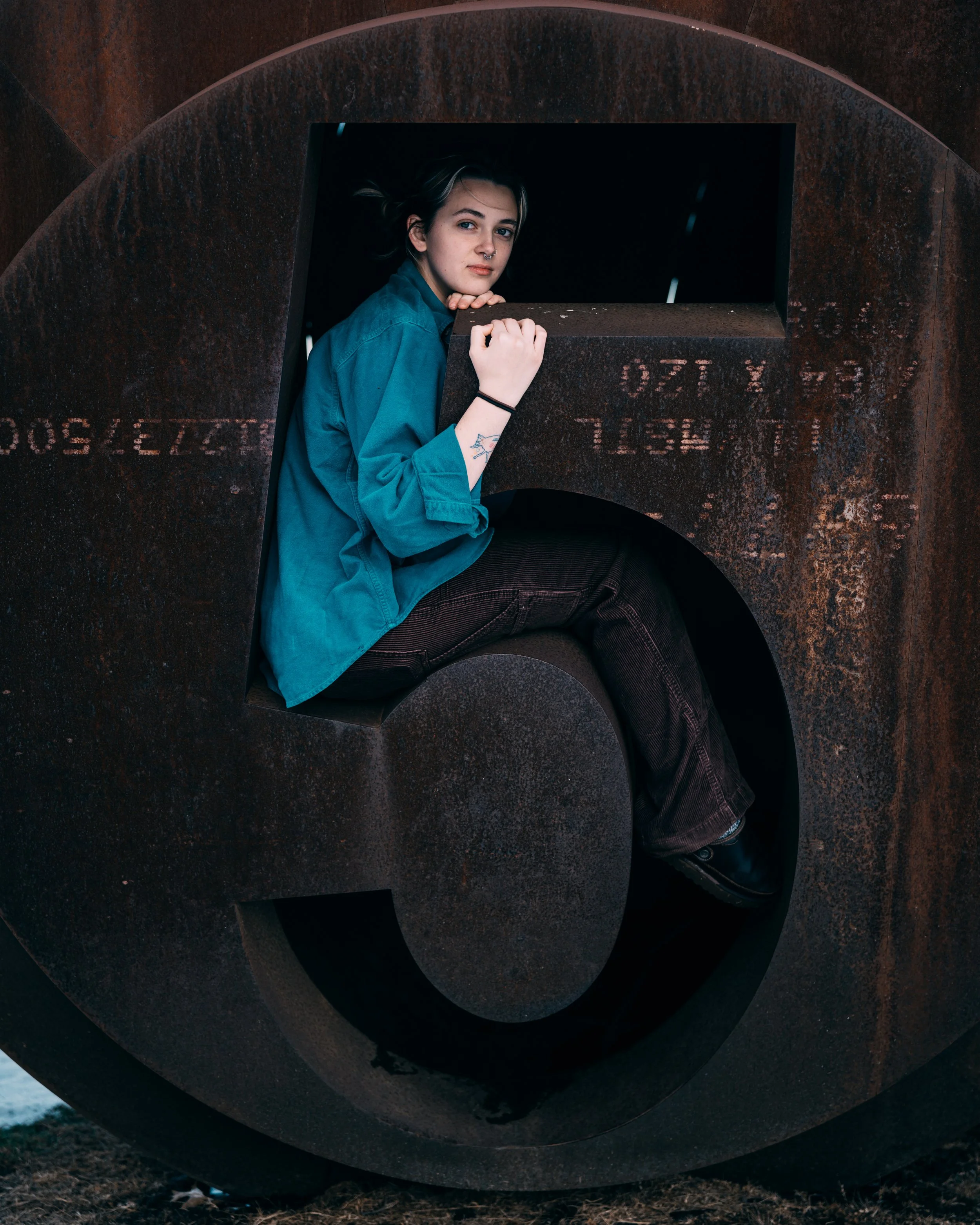
This is a year-long series following Josie Langhorst, a Minnesota artist new to the Twin Cities, as she shares her experiences entering the scene and making music in a new environment.
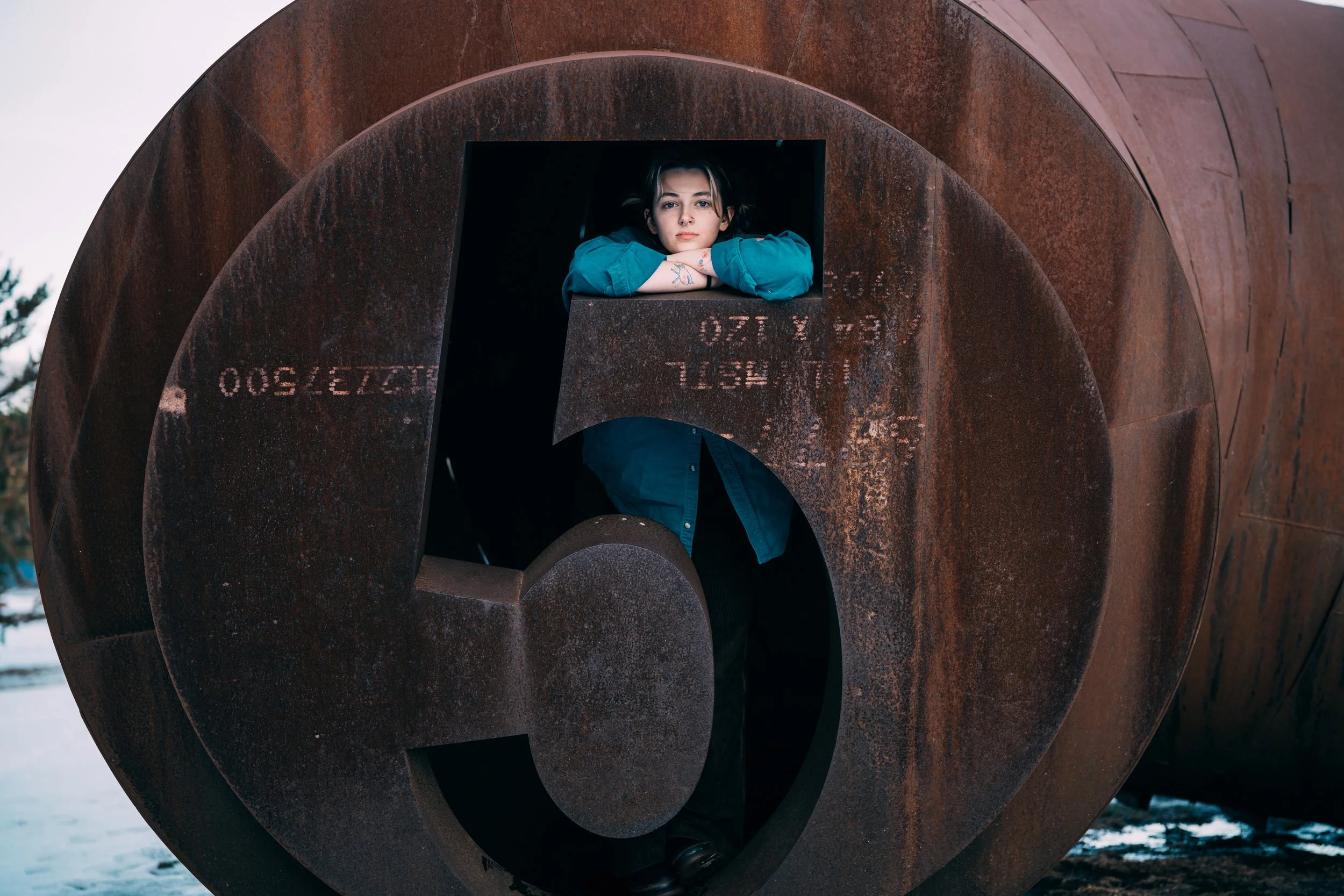
December 2025 to mid-January 2026
There’s a particular quiet that typically settles in during a Minnesota winter, especially as the year comes to an end. The stillness invites reflections and resolutions, whether you want it to or not. For Josie Langhorst, this pause marks her first full winter living in the Twin Cities and a stretch of time defined less by abundant resolutions and more by learning how to nest with uncertainty, grief, and slow, intentional growth.
Instead of setting firm intentions at the start of the year, Josie found herself looking backward, scrolling through photos and what she released musically in 2025. An EP with her Duluth band Moxen and her own album Deer Park are landmark moments from the year. In between those releases are countless smaller moments that add up to identity, goals, and fulfillment in what she loves to do. And yet, standing at the beginning of 2026, she felt the familiar sensation of navigating new paths, this time in a city riddled with renewed turmoil.
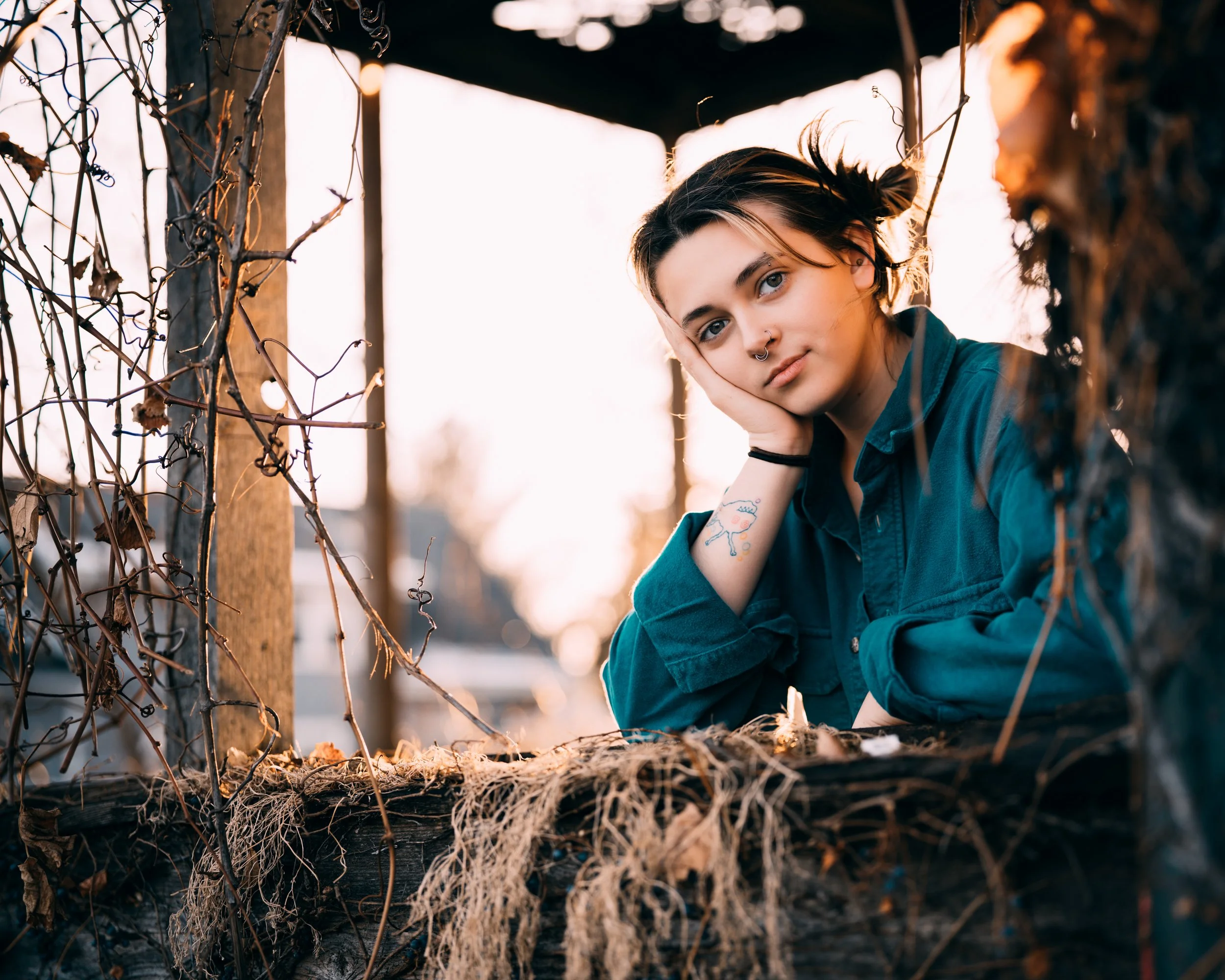
Moving from Duluth to Minneapolis came with assumptions Josie didn’t realize she was carrying. In a smaller scene, access feels more visible. But in the Twin Cities, it can feel guarded, even intimidating. For months she felt hesitant and afraid of inserting herself into circles that already seemed closed. The fear wasn’t about specific venues or musicians, but about a deeper anxiety built on the internal repeating question of What if I don’t belong here?
That internal barrier, Josie’s learned, was the hardest one to dismantle. Slowly through work, casual conversations, open mic nights, and plenty of emails, she began to feel something shift. Roots don’t appear overnight; they start quietly. Her new job in a classroom brought structure and grounding, which is something music alone couldn’t provide. Working with kids offered her a parallel sense of purpose and a reminder that value doesn’t only come from stages or applause, but from being present and caring.

Getting connected in the Twin Cities has required consistent intention, such as emails and DMs that, for Josie, can trigger an overthinking spiral of doubt. Josie admits that even good news, like being invited to split a bill on February 5th, or to join a show at Pilllar Forum, can feel excitingly overwhelming. There’s a fear of saying too much, or not enough, of coming on too strong or seeming indifferent. Most of the time, she’s realized, the pressure exists only in her head. Each small leap matters. Each response is an act of belief, not just in opportunity, but in her own right to take up space.
This past couple of weeks hasn’t unfolded in a vacuum either. The death of Renee Good, and the broader violence and fear surrounding the cities with the presence of ICE and Border Patrol agents, have weighed heavily on Josie’s songwriting. Watching her new community mobilize, grieve, and protect one another has added to her sense of responsibility as an artist. Josie admits that small towns can actually lack support from the community; even though everyone seems to know everyone else, that doesn’t necessarily mean there would be help if you were in trouble.
“Witnessing the community’s reaction and proactive response, not only to Renee Good’s death but to the countless families that have been torn apart and witnessed their loved ones killed, is astounding. People are coming together more than ever and creating a belongingness that is so powerful and deep. I feel such pride in my community and state.”
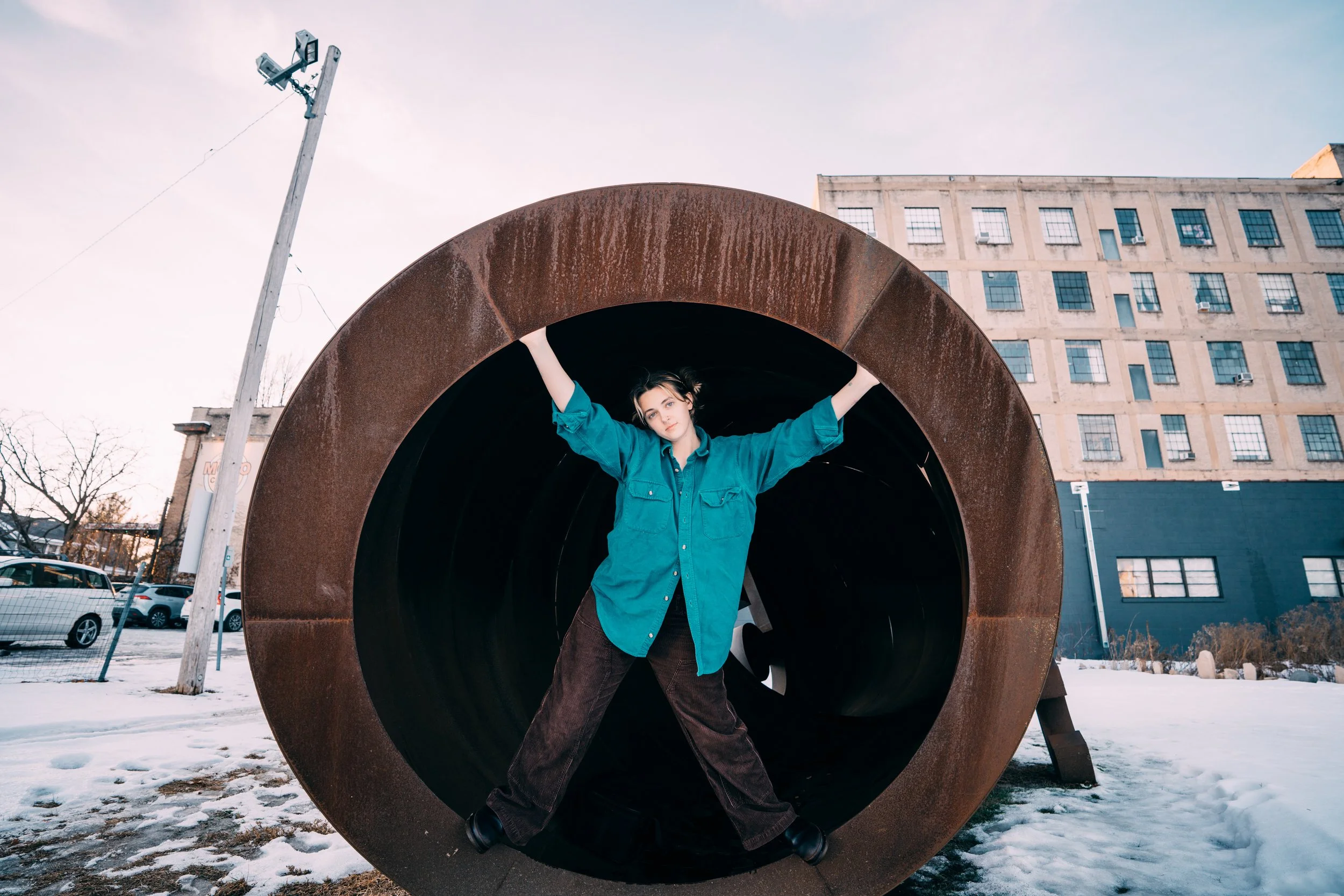
Josie remembers a Free Palestine protest in Duluth, where Ross Thorn performed a song about the corruption of the world. It brought awareness to her of the unity that political songs can have. But protest songs aren’t just expressions, they’re documentation of what happening around us. They hold anger and sorrow in a form that can be shared, remembered, and felt together in those moments.
Josie has felt pulled toward writing for the people whose stories are too often ignored. In moments like these, creativity isn’t optional for her, it’s instinct. Music becomes a way to process what words alone can’t, while offering listeners a place to sit with their own grief and rage without feeling isolated.
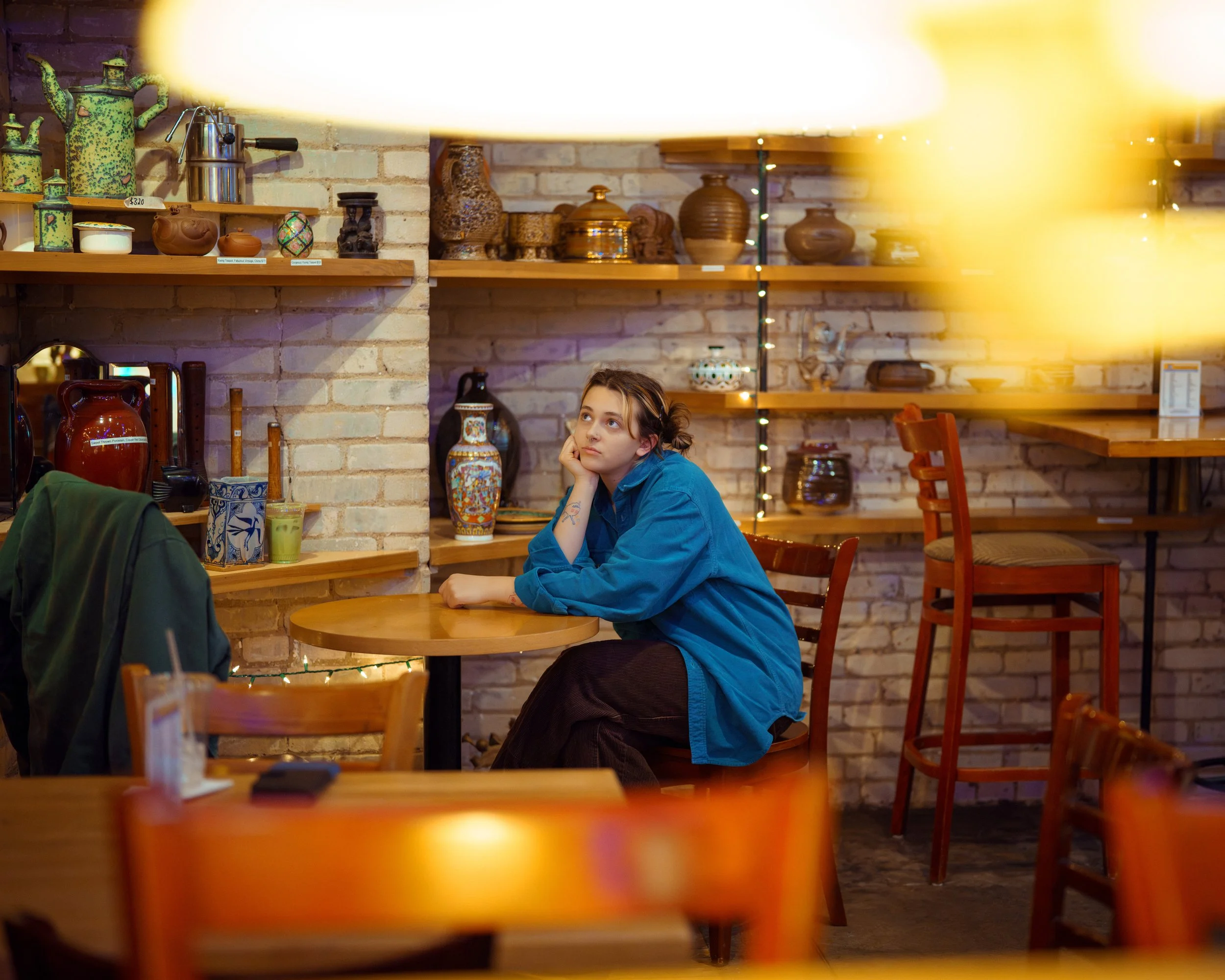
In the recording studio, Josie found a different kind of confidence. Working with musician Grant Glad and engineer Hunter Hawthorne, she was able to experiment freely, to trust her ideas, and to hear affirmation without performance anxiety clouding the moment. Recording vocals, especially when she can’t see who’s listening, allows her to be imperfect, exploratory, and honest. Josie shares that it’s definitely a contrast to the vulnerability of a live performance, where every note is shared in real time.
If there’s a throughline to this month, it’s patience. Josie no longer experiences uncertainty as suffocating. Instead it feels like possibilities. Her notebook is full of sketches for a future album, unbound by deadlines or expectations. She’s also resisting the urge to measure progress against others, even while acknowledging the jealousy that can surface when opportunities pass her by.
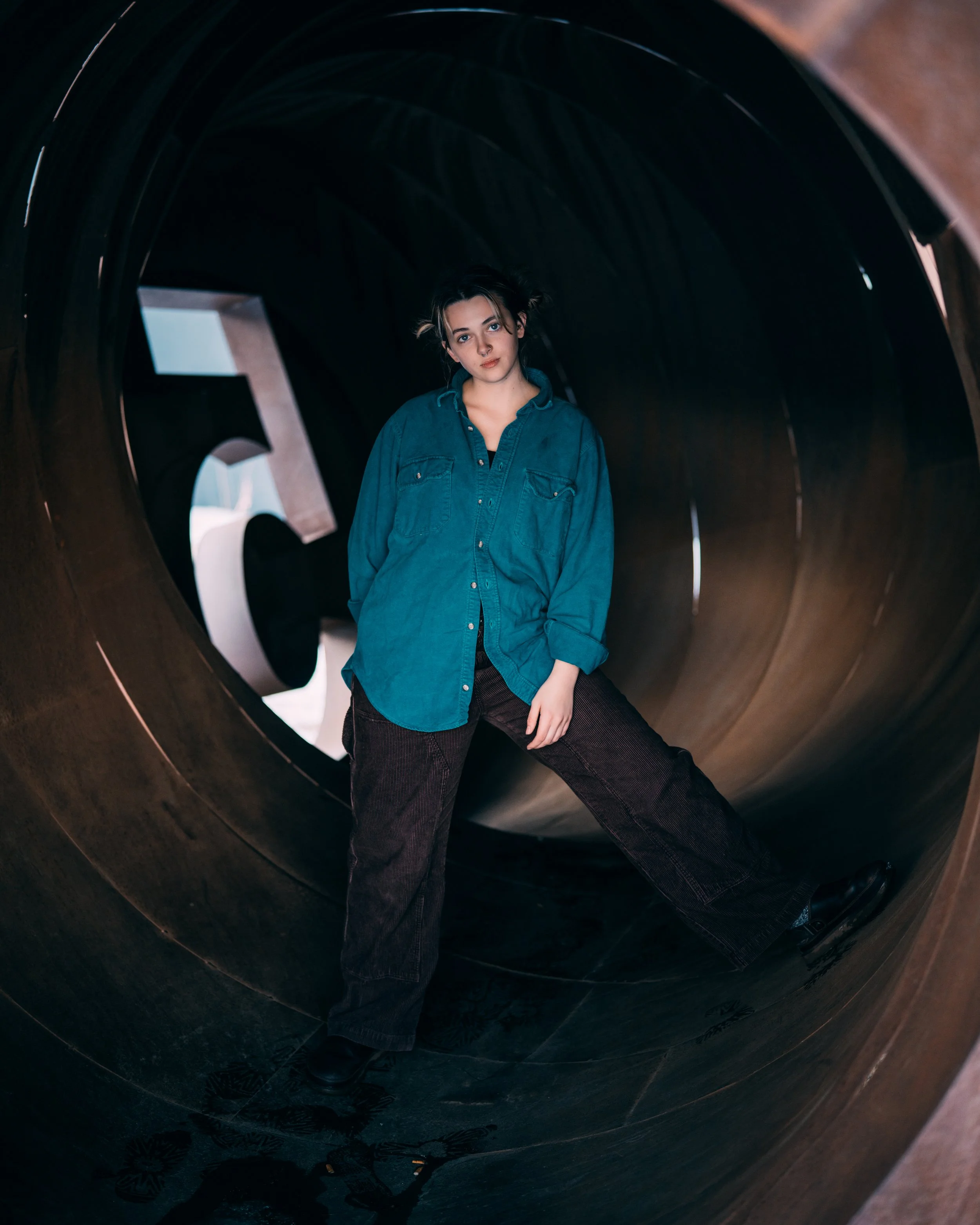
Belonging, she says, comes later. First comes becoming, which is the slow, uneven work of discovering who you are in a new place. My thoughts go to Madi Diaz and her song “New Person, Old Place” and the thematic line of “Can’t be a new person in an old place.”
For now, Josie Langhorst is learning how to stay and how to listen, and how to write through the noise. And in a city that asks you to prove yourself quietly, she’s beginning to understand that growth doesn’t always announce itself. Sometimes it just keeps going, one song, one connection, one winter at a time.
About the Author & Photographer

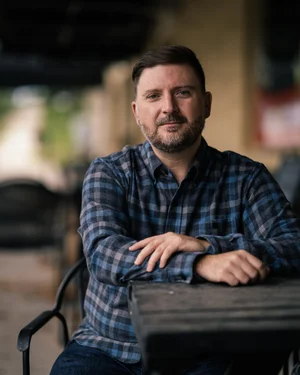
Tom Smouse. Photo Credit: Chris Taylor.
Tom Smouse is an innovative collaborator with 20 years of experience in the Minnesota music industry. As a professional photographer, podcaster, and music journalist, sharing stories from the community remains his core passion. When not at a show you can find him at a record store.