Event Review: The 50th Great River Folk Festival in La Crosse, Wisconsin
Fifty years in, La Crosse’s volunteer-run folk festival is still one of the Upper Midwest’s best-kept secrets, and its lineup and listening crowds are as strong as ever.
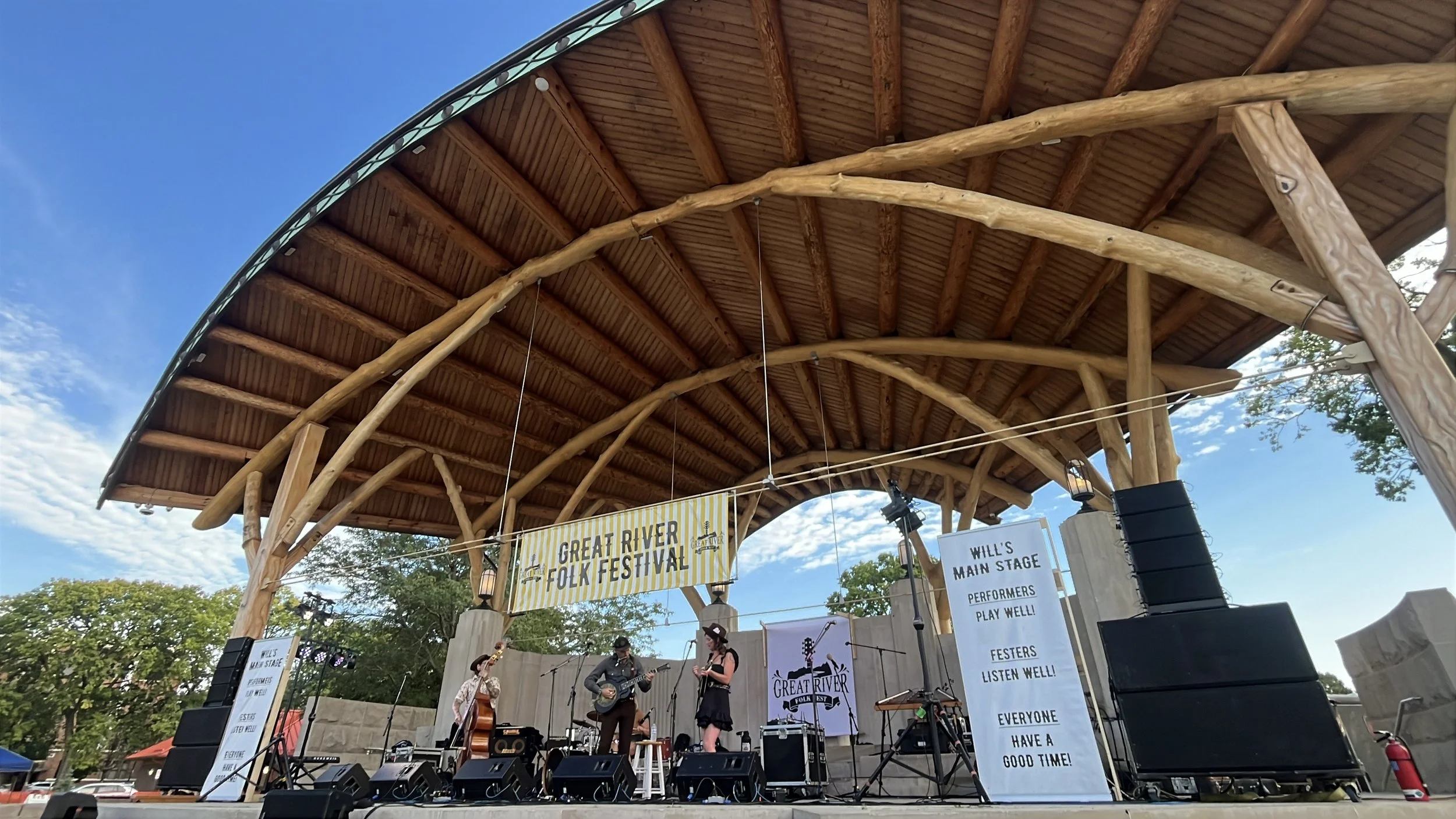
Every year I pull into Riverside Park in La Crosse, Wisconsin, and wonder why more Minnesotans aren’t here with me. The Great River Folk Festival is less than a three-hour drive from the Twin Cities, it sits right on the bank of the Mississippi, and it draws a caliber of artists you’d expect to see at festivals several times its size. It has a loyal following, but it remains a bit of an underappreciated gem.
Festival organizer Esther Gvora summed it up in an interview with WKBT: “I always call it La Crosse’s best kept secret.”
If so, it’s an incredibly long-held secret. This year’s festival, held August 28–30, 2026, was the 50th Great River Folk Festival, a milestone few independent festivals reach, let alone one run entirely by volunteers. Organizers bill it as the Upper Midwest’s longest-running folk festival, and its low-key spirit is part of the plan: “We aren’t going for huge crowds, long lines, or big profit margins,” their website declares. “We are a group of volunteers who love great music, original art, and being outside.”
There were frequent reminders of the anniversary throughout the weekend, from stage banter to a history tent full of decades of posters, photos and T-shirts. And the quality of the festival spoke for itself: three days of casual song swaps and polished main stage sets that reminded me why this little festival has lasted as long as it has.
Fifty Years of Great River
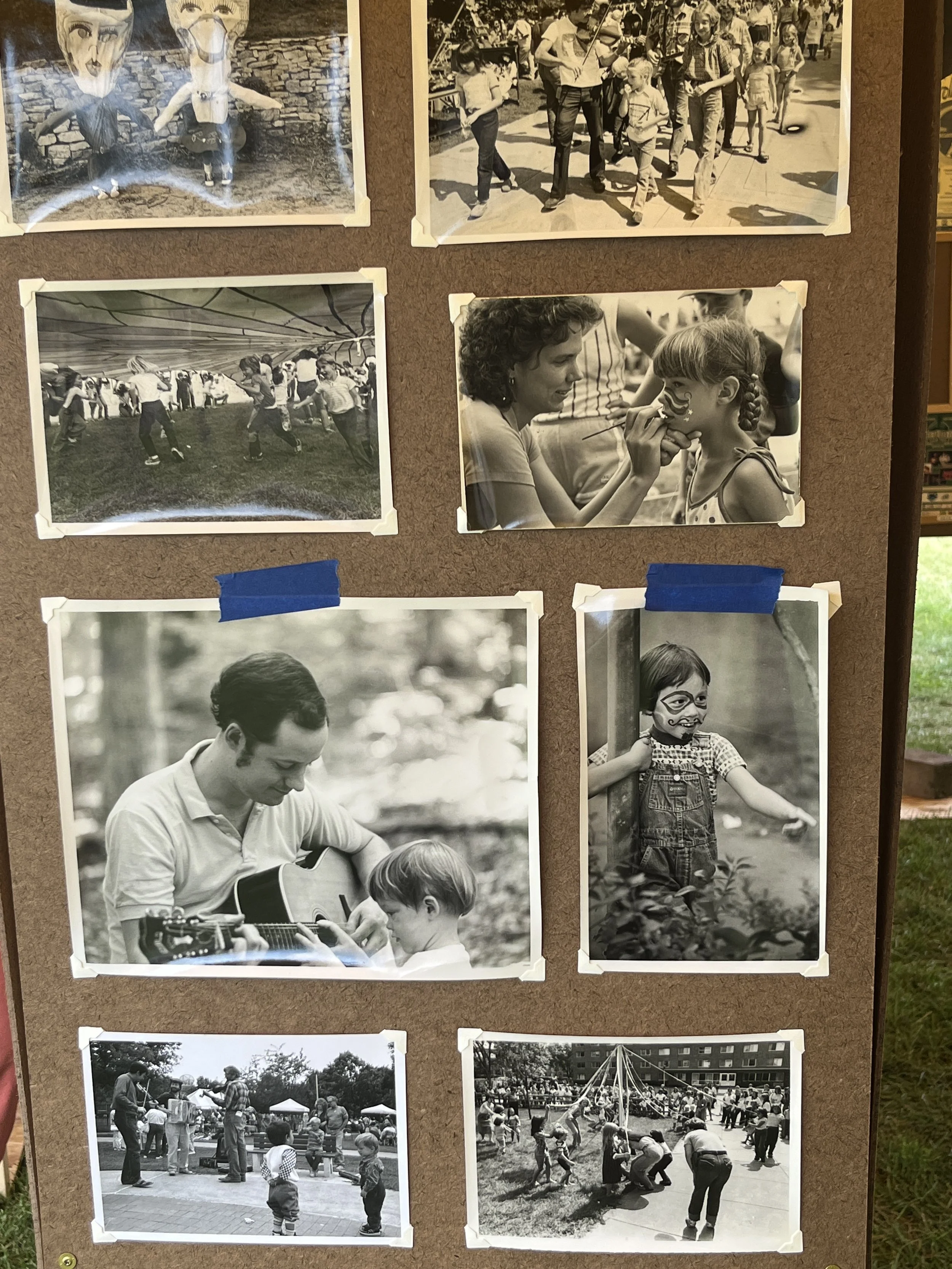
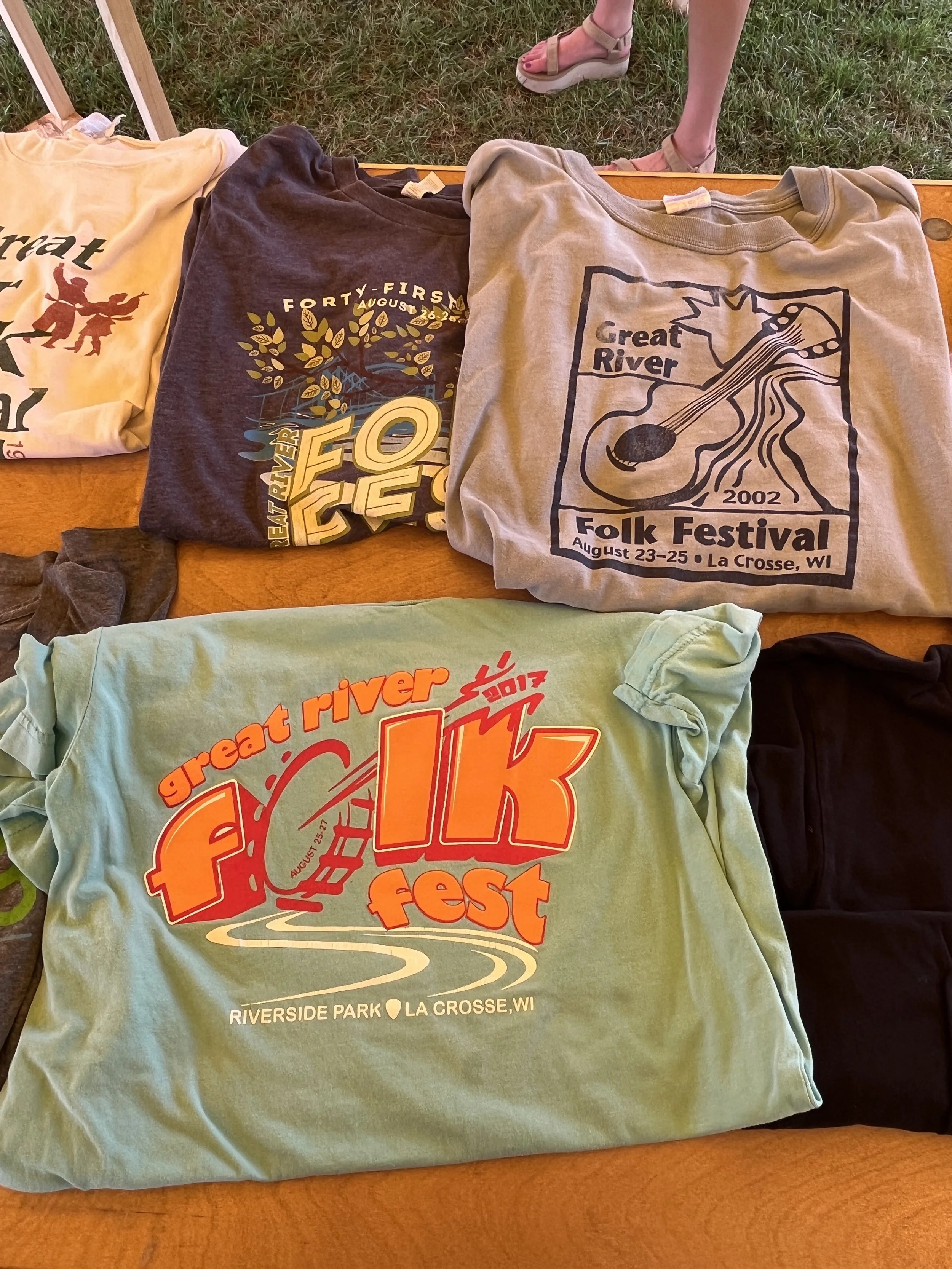
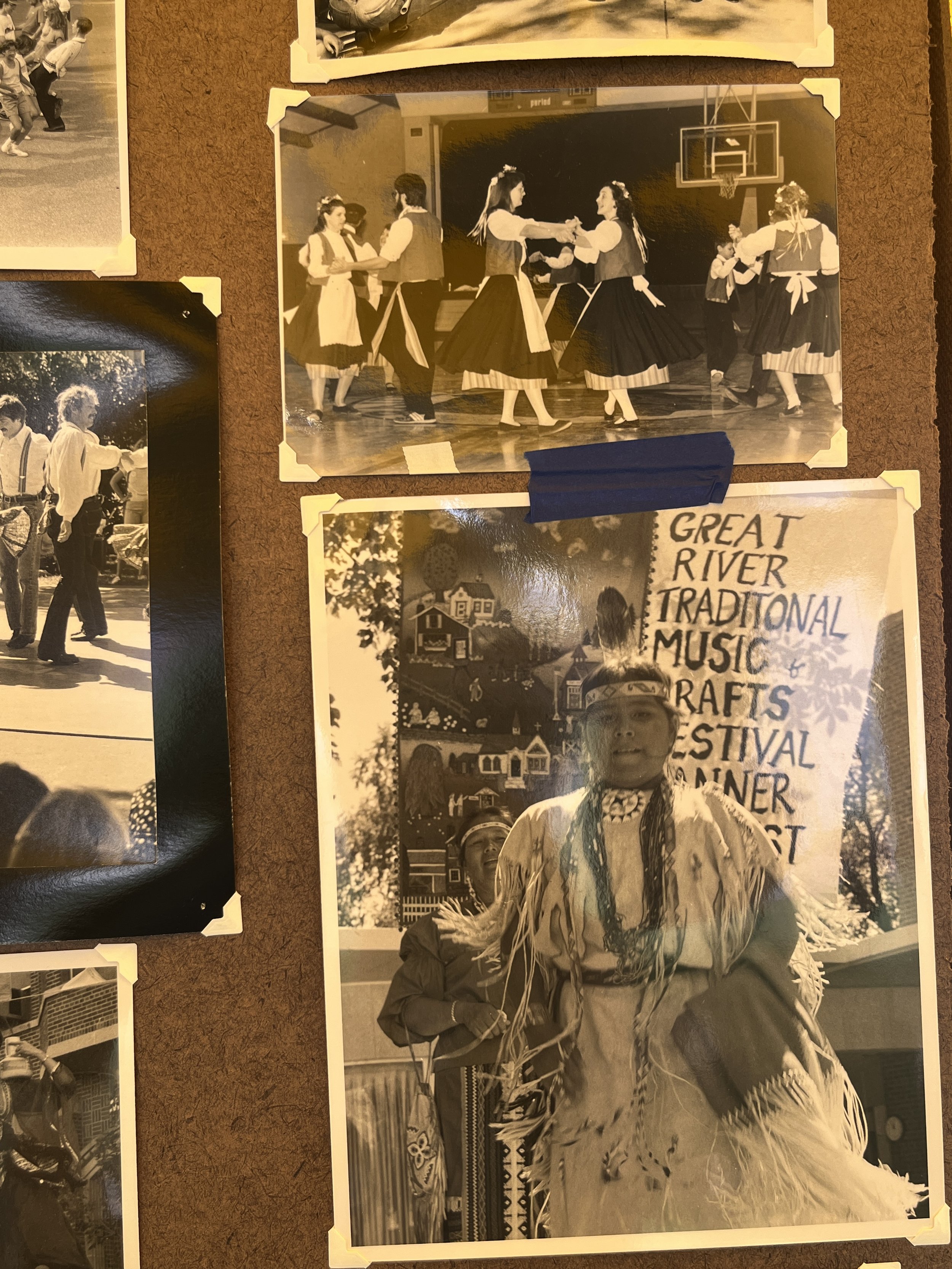
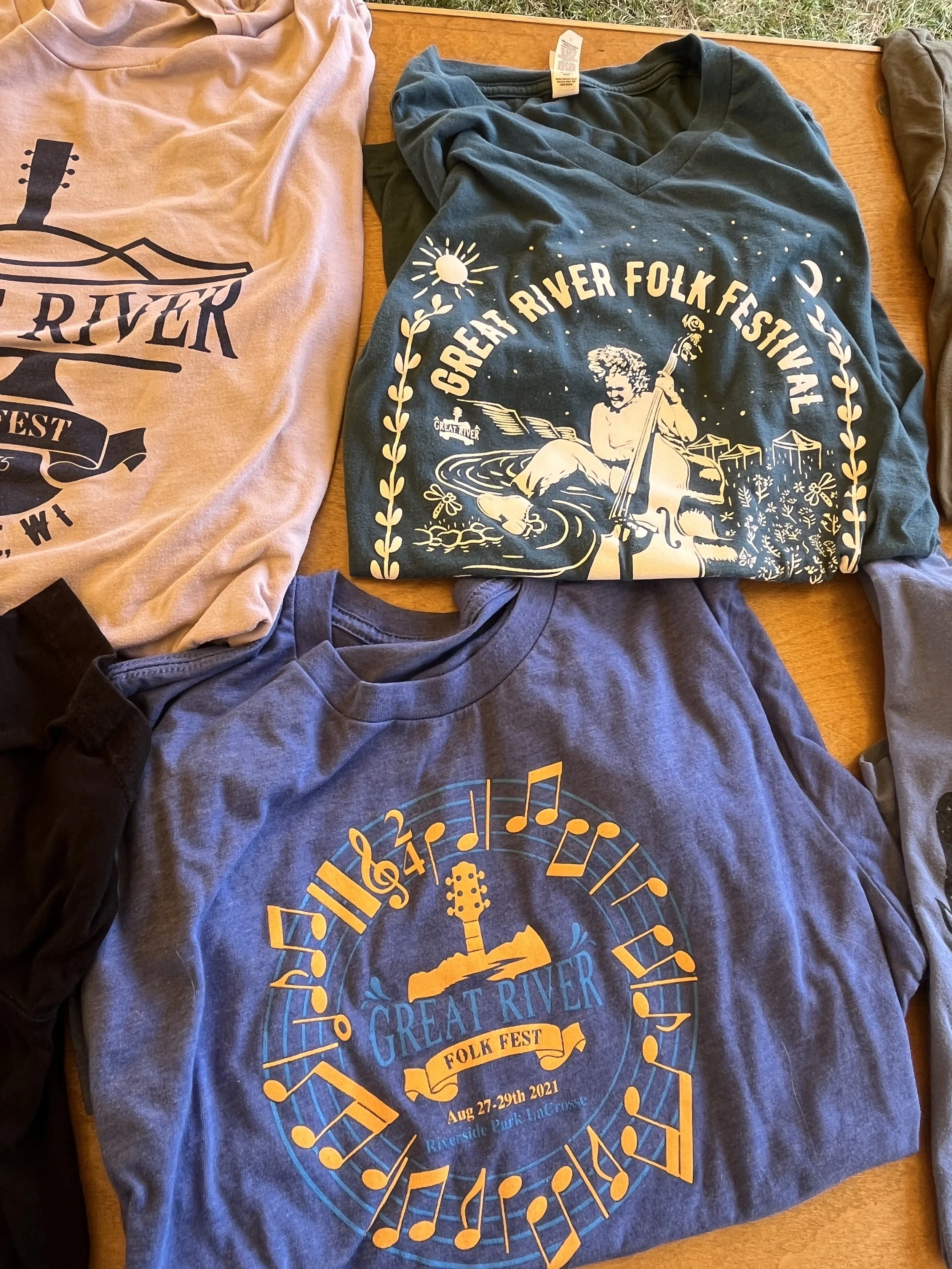
Near the center of the festival grounds sat the history tent, with attendees wandering through on breaks between sets. Corkboards held festival posters and black-and-white photos from the early years, and tables were stacked with decades of festival T-shirts.
The festival (which would’ve had its 50th iteration a year earlier if not for the pandemic) began in 1976. The Great River Traditional Music & Crafts Festival (which changed to the current name in 1997) was held on the UW–La Crosse campus green before it made Riverside Park its home. The early photos gave us a glimpse at maypole dancing, folk dancers in traditional indigenous and international costume, and families with kids having the time of their lives. (I bet many of those kids are now loyal adult fans still returning to the festival year after year.)
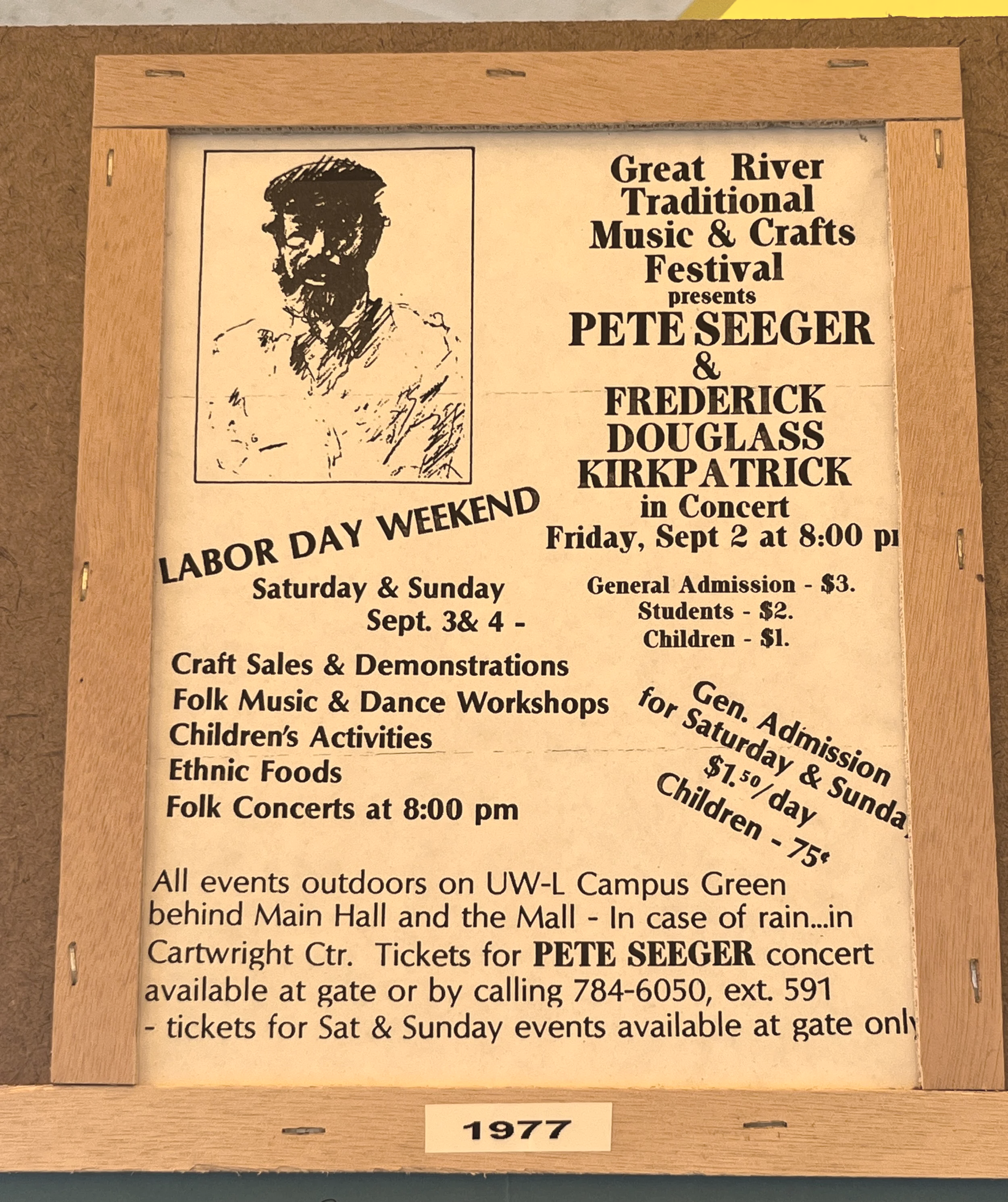
One name that came up again and again all weekend was early featured artist Pete Seeger. A framed poster in the tent showed the festival advertising Seeger’s appearance in 1977, just its second year, alongside Frederick Douglass Kirkpatrick, a civil rights organizer and singer who co-founded the Deacons for Defense and Justice and recorded several albums with Seeger for Smithsonian Folkways. Seeing that poster made it clear that the protest and justice tradition has been part of this festival since its earliest years, and that thread ran through the whole weekend.
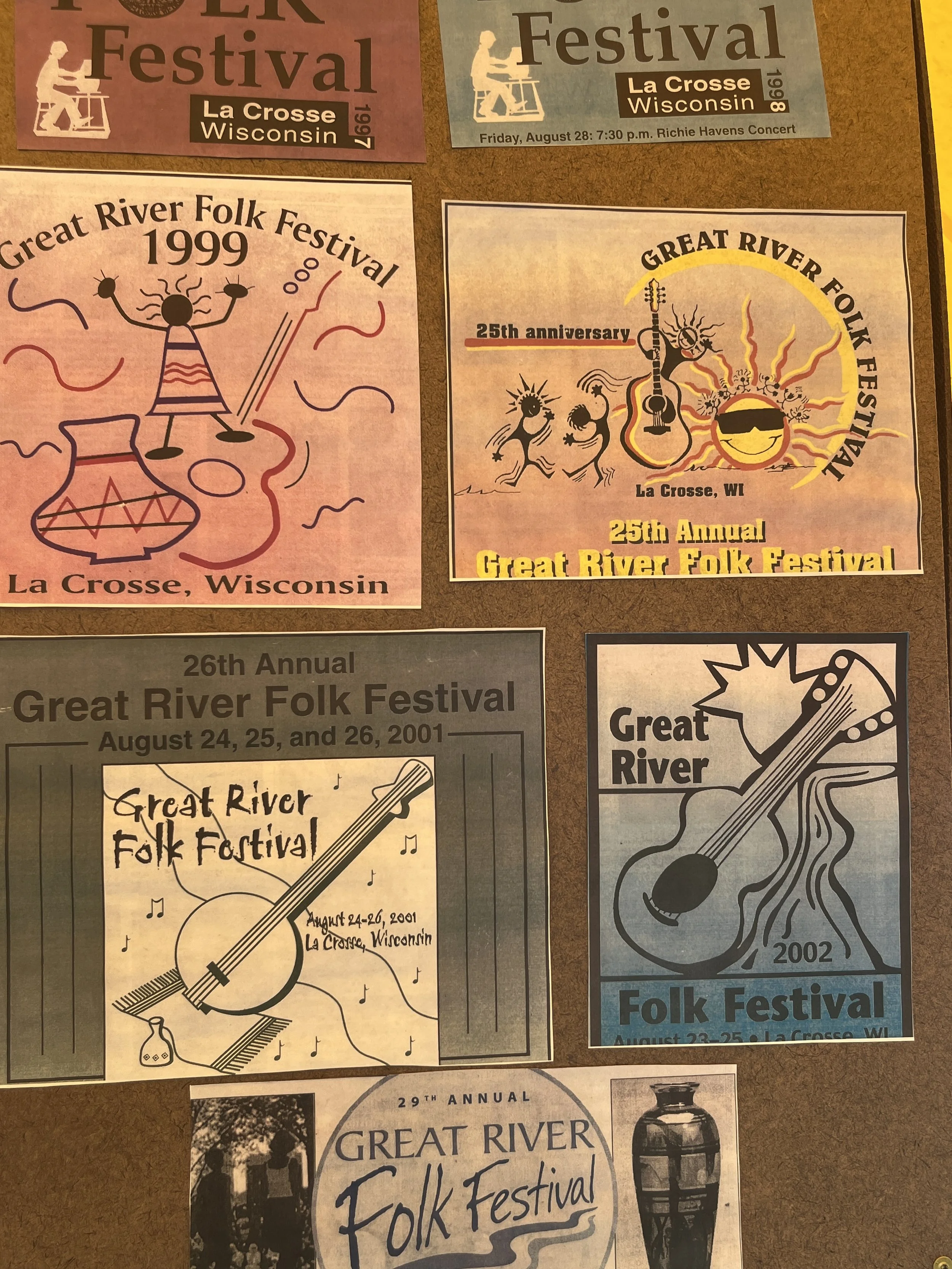
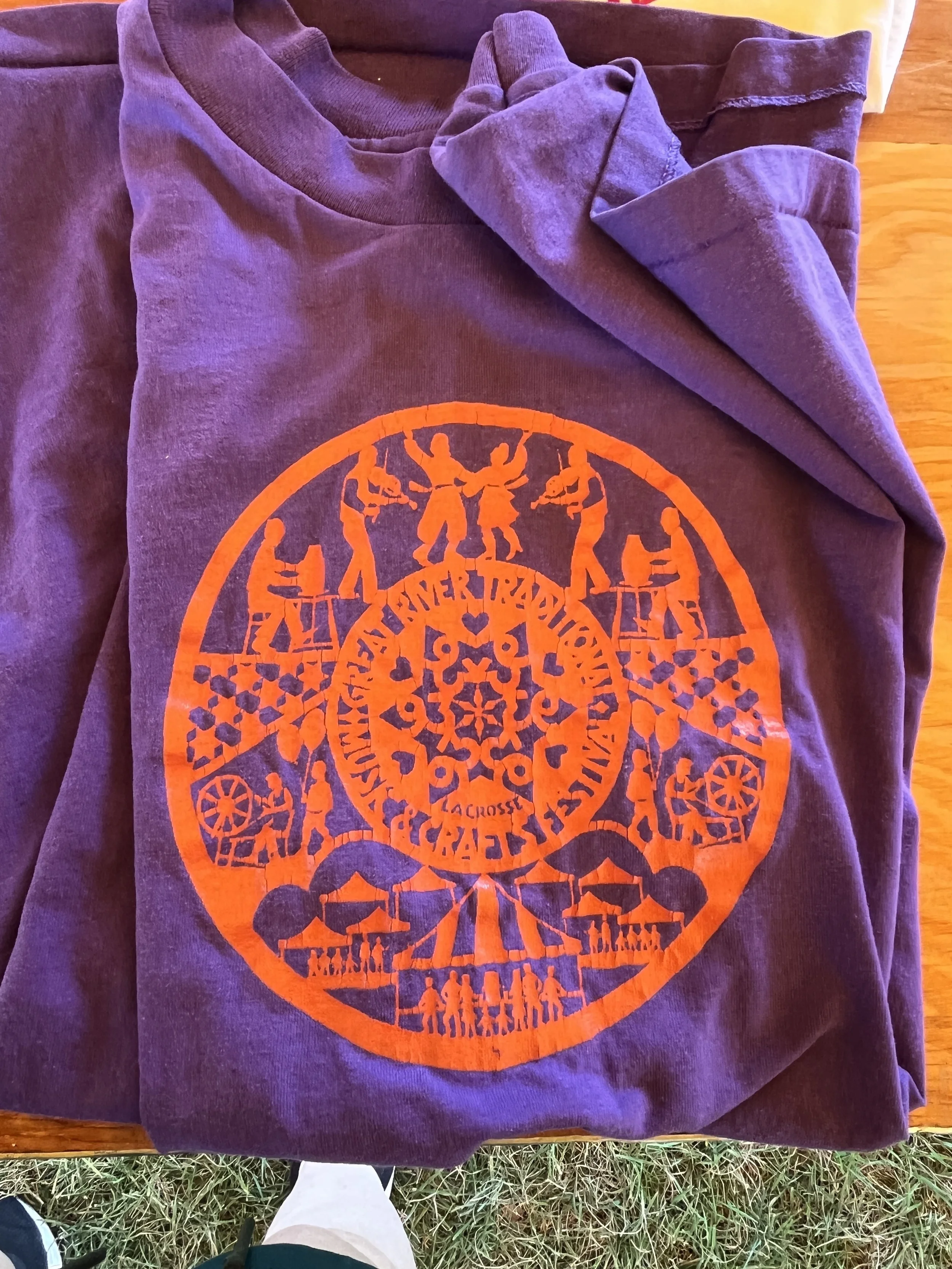
Other posters traced the festival through the decades. The T-shirt table was its own time capsule, from a purple shirt with an intricate papercut-style design under the original name to the 2021 shirt marking the festival’s return to Riverside Park after the pandemic interrupted its annual run.
Day One
The first act on the main stage Friday evening was La Crosse Sessions Band, playing a mix of originals and fiery protest songs from years past. It’s a hard time to be an American right now, but it’s a great time to be a folk music lover, because those old songs hit so hard. They remind us that fascists, heartless bosses and hard times have come before, and that people have always risen up, spoken up and brought about change. With the festival’s history all around us, it felt like the right way to open the 50th, and I was grateful for the reminder.
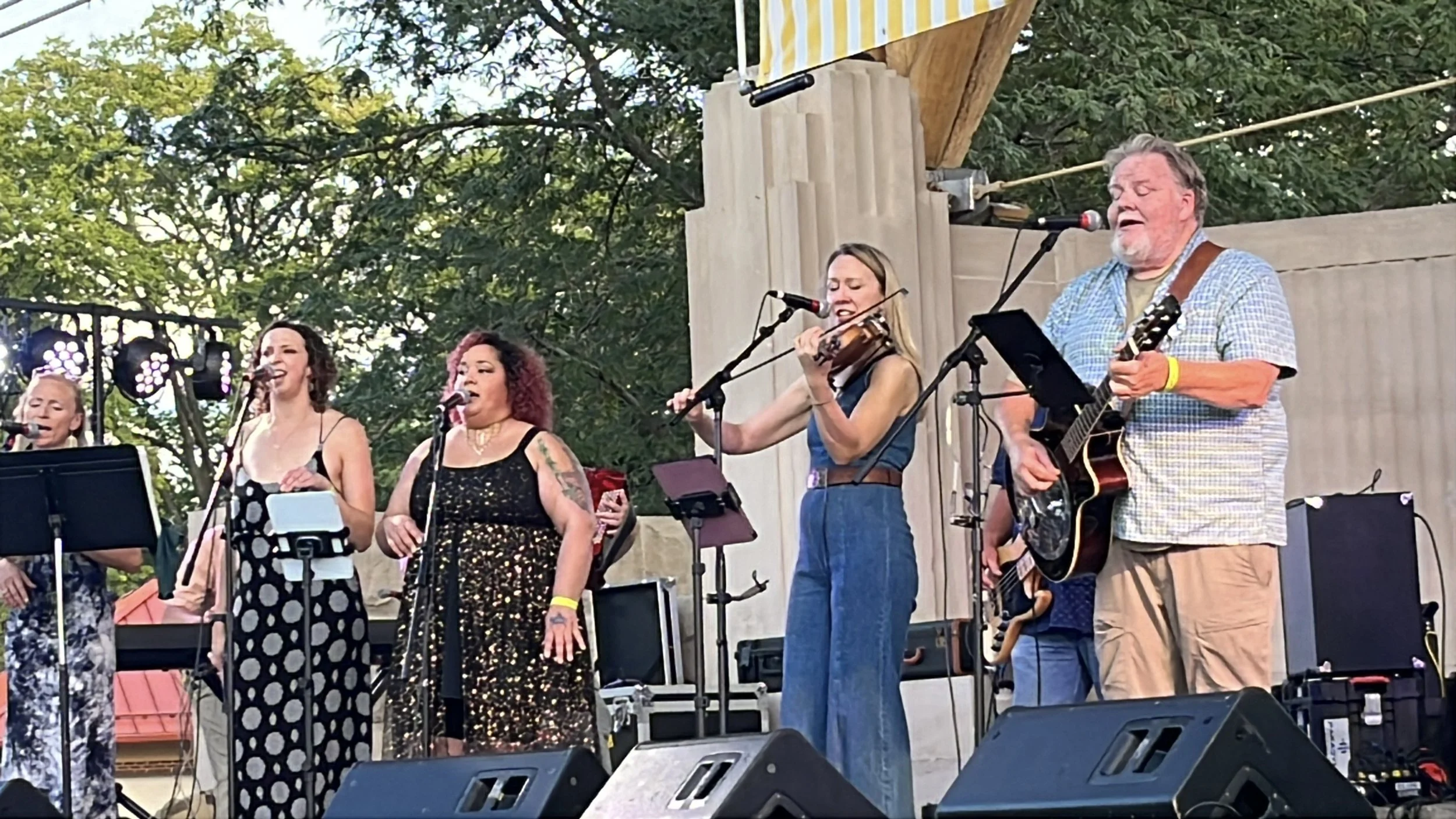
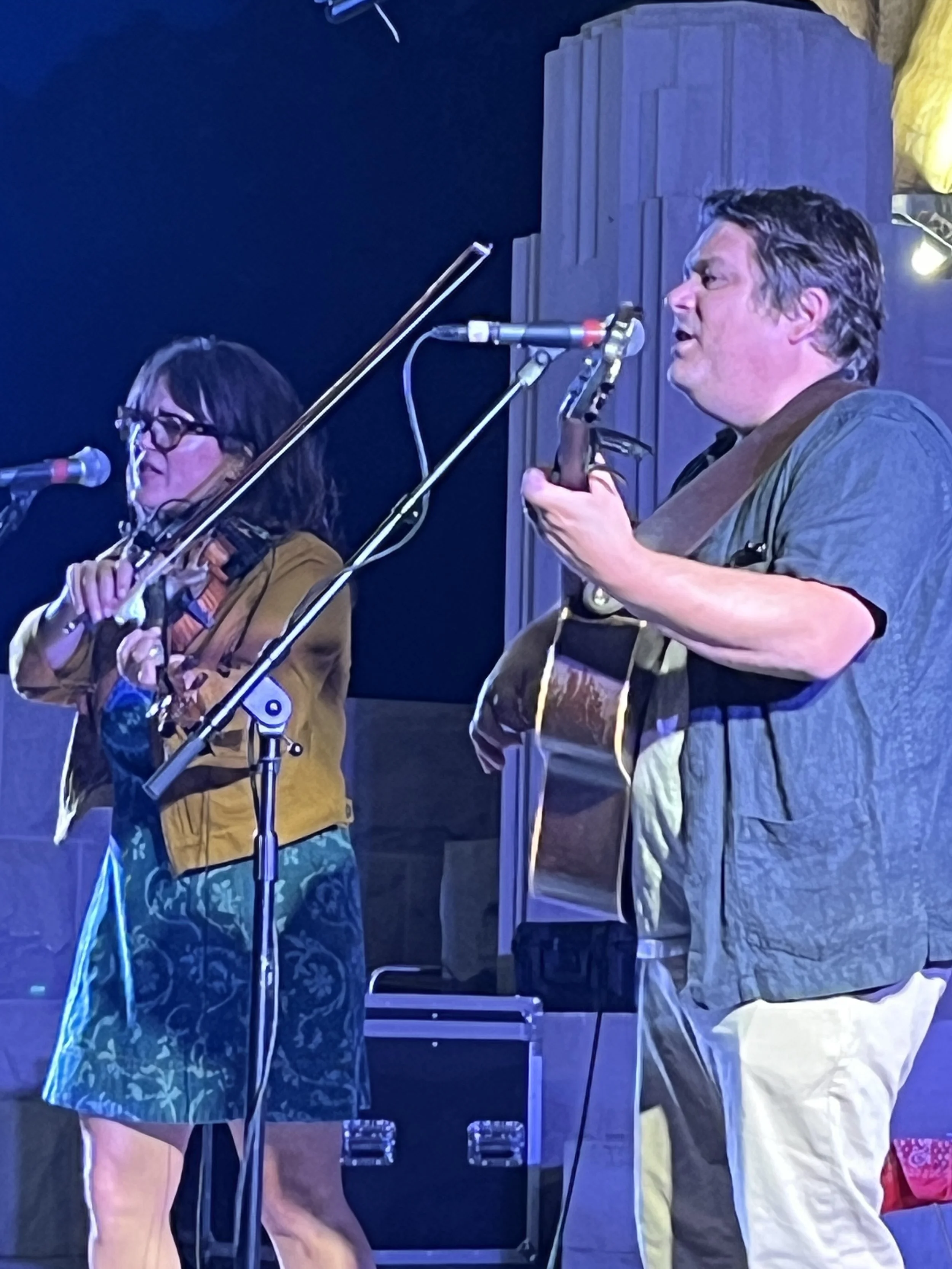
Headlining the first night was Watkins Family Hour. Siblings Sara and Sean Watkins (also two-thirds of Nickel Creek) often bring a larger cast to this project, but this time they performed as a duo. It was an amazing set from start to finish, with insane fiddle and guitar and gorgeous harmonies, starting with Dolly Parton’s “Do I Ever Cross Your Mind” (Dolly’s recent passing prompted several such tributes) and ending with a crowd singalong of late songwriter/steamboat pilot John Hartford’s “Long Hot Summer Days,” a perfect choice for a night on the banks of the Mississippi. Between the sunset over the river, the full moon rising and this lovely, ubertalented sibling duo, I could not have hoped for a better start to Great River’s 50th anniversary celebration.
Day Two
Saturday is the long day at Great River, and this year it added up to nearly 12 hours of music for me. It kicked off on the main stage with Amadans, a high-energy local band that plays a mix of traditional and modern Irish music, covers and originals. The weather played along with a very Irish backdrop of rain and cool temperatures.
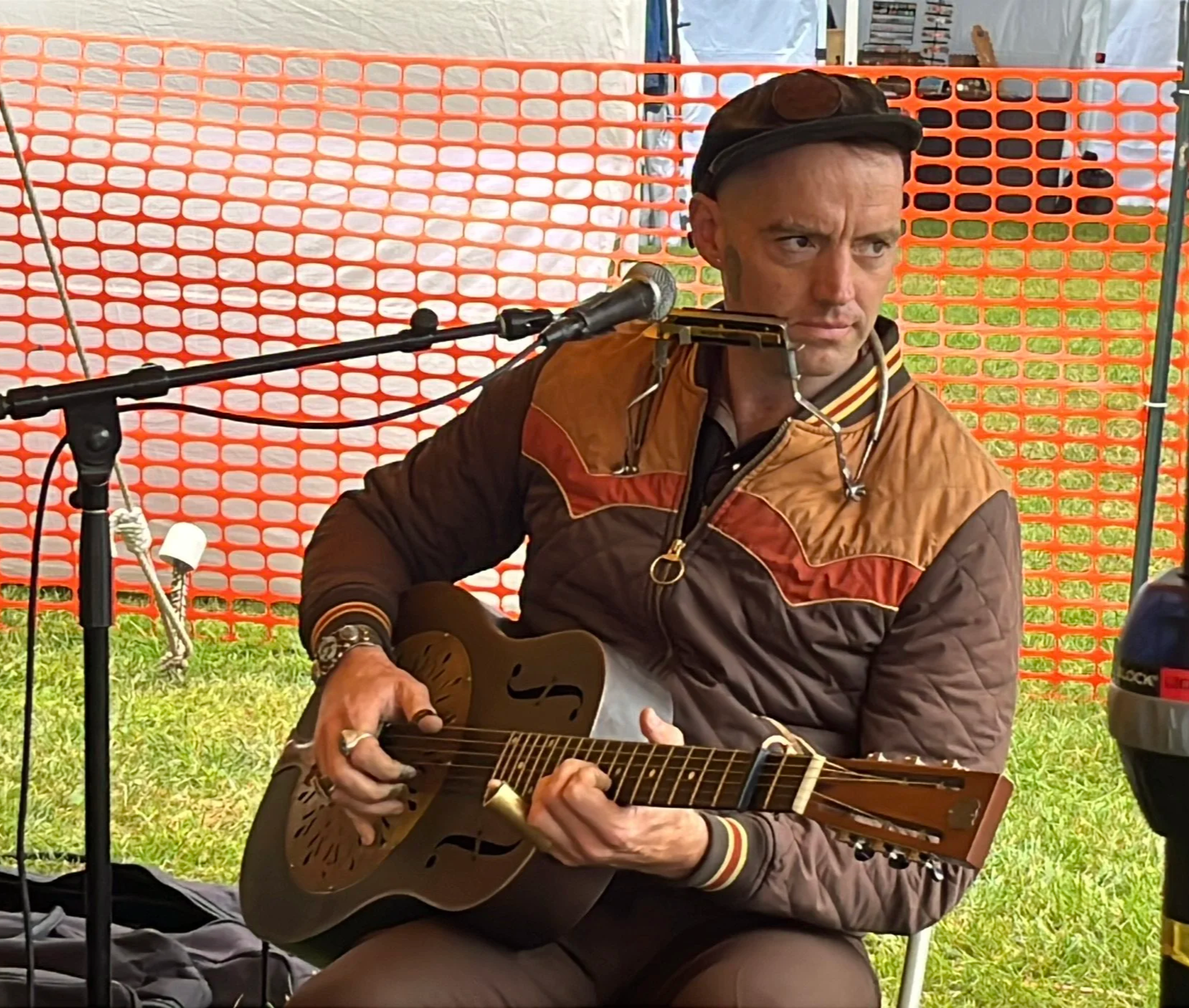
Then it was on to the song swaps, which are the crown jewel of this festival. The first Saturday swap was travel songs, and if you invite Jason Dea West to your event and hold a travel songs set without him, there’d probably be a riot. (Or maybe the paradox would cause the universe to fold in on itself …) Luckily, Great River understood the assignment and put him in this round with festival mainstay Johnsmith and festival alum Susan Werner. And lo, it was magical. West is rough and plainspoken, Johnsmith is romantic and emotional, and Werner is brash and hilarious. Together they were an absolute delight.
The next swap took on love and heartbreak. Johnsmith, accompanied by his daughter, Elisi Smith-Waller of Crooked Willow, traded tunes with Wisconsin artist Hemma and Minnesota’s Sammie Jean Cohen about romantic, familial and self love. Many of the songs were painful, but some were empowering and uplifting, and our hearts were full by the end of the round.
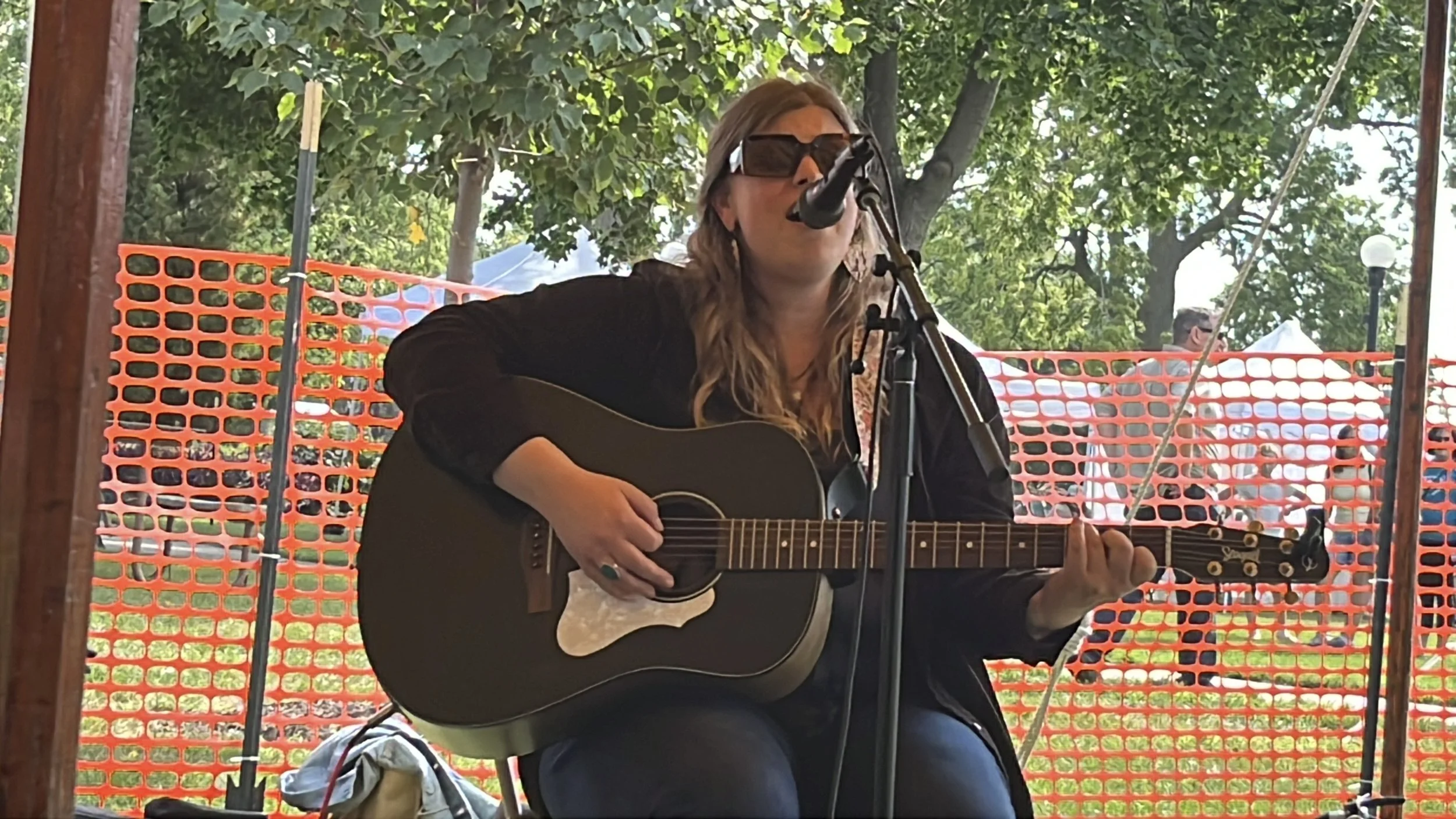
Next up was Creekbed Carter Hogan. The Midwest is blessed that this amazing folk force of nature left the South to call Minnesota home. Their music and persona are quirky and funny, but their work is dead serious, including a Hazel Dickens cover. Even a singalong song about a hot dog museum carries a profound message about social and economic justice.
Jason Dea West returned to the main stage later in the day, this time with a band. I know I’ve seen him with a band before, but I swear his sound has gotten more rollicking in the intervening years, and it made for a really fun set. As a Midwesterner I’m lucky, because odds are good that when he plays here his sister, Wisconsin’s Nora Jean, will join him, as she did for this set.
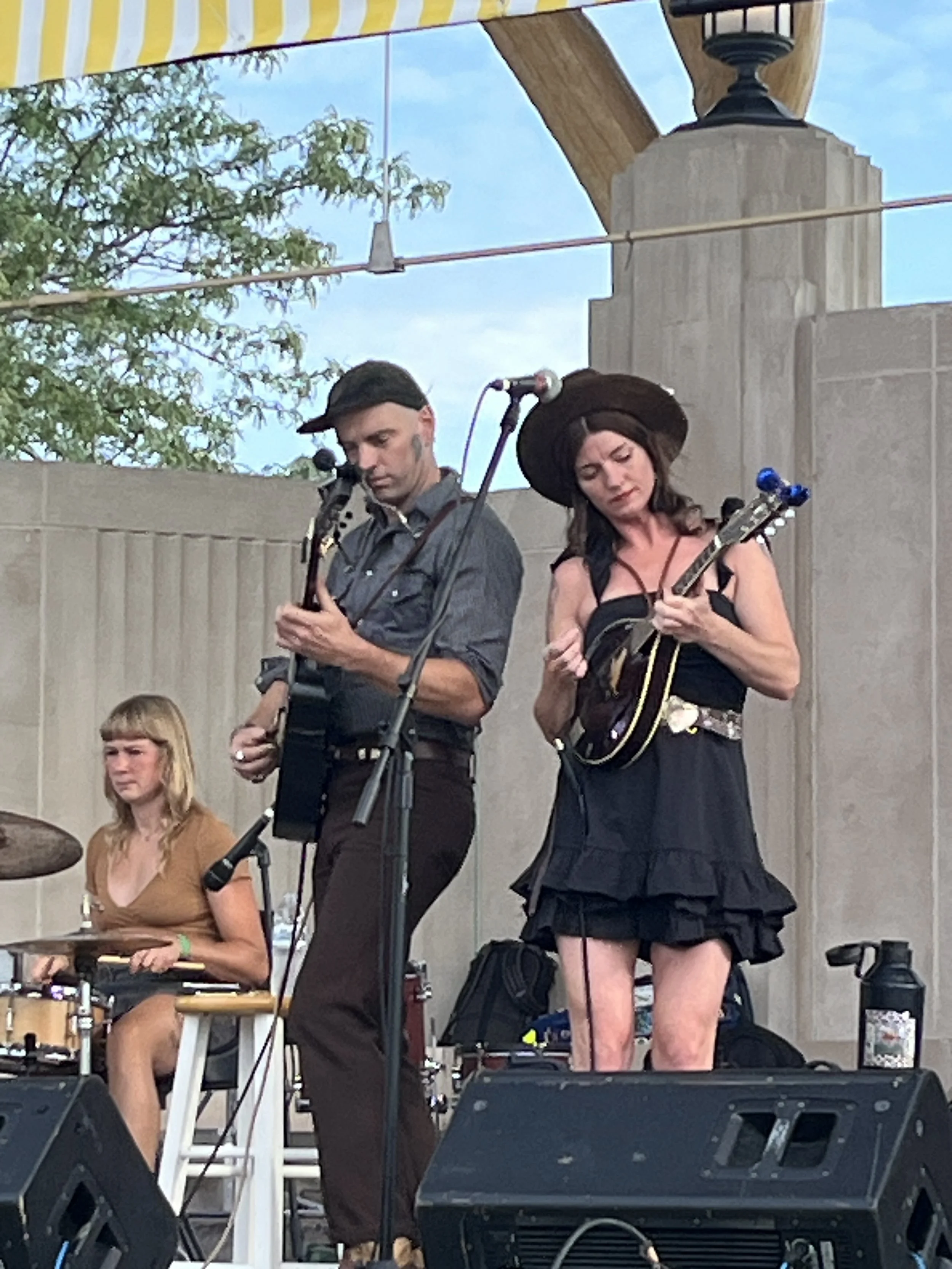
Then came John McCutcheon. He’s apparently a frequent returner to Great River, but this was my first time seeing him, and oh my goodness. On top of breathtaking work on hammered dulcimer, banjo, guitar and piano, he had a range of songs that made the crowd roar with laughter one minute and weep openly the next. It was a treat when Susan Werner, Johnsmith and Vance Gilbert (and the audience) joined him for a song.
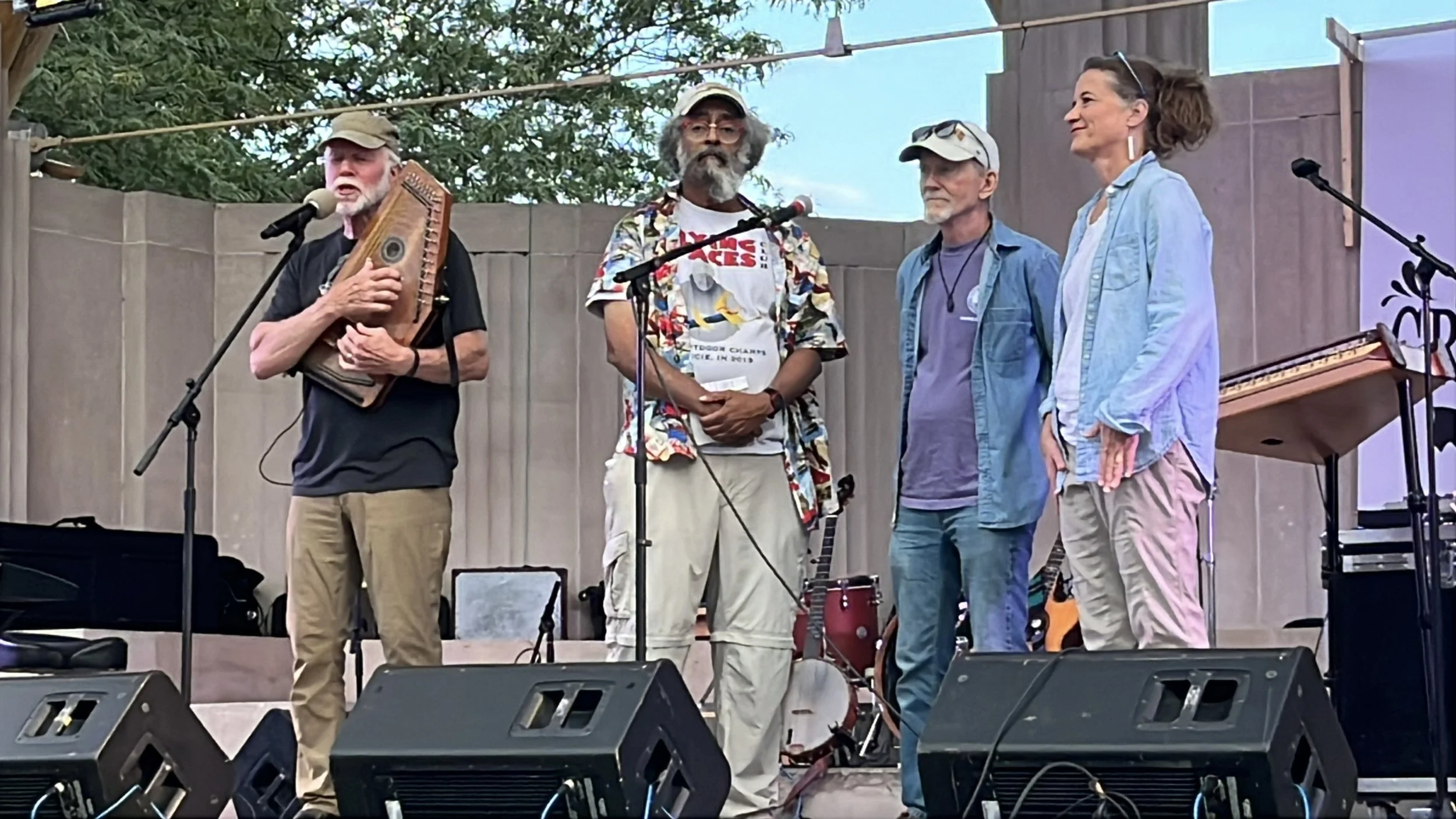
My friend Sarah Morris, who interviewed the next act I saw, Maya de Vitry, for our About That Song series, told me I’d love her, and she was right. From social justice to rock ’n’ roll to tender introspection, de Vitry’s songwriting nails it every time, and I could listen to her sing all day.
Susan Werner took the main stage next. Fun fact: We were on a panel together at the 2024 Folk Alliance Region Midwest (FARM) conference, but I didn’t get to see her perform there. I’m kicking myself now, because at Great River I discovered that she is phenomenal. From silly songs to pointed satire, she uses humor, keen observation and her powerful, versatile voice to keep the audience in the palm of her hand.
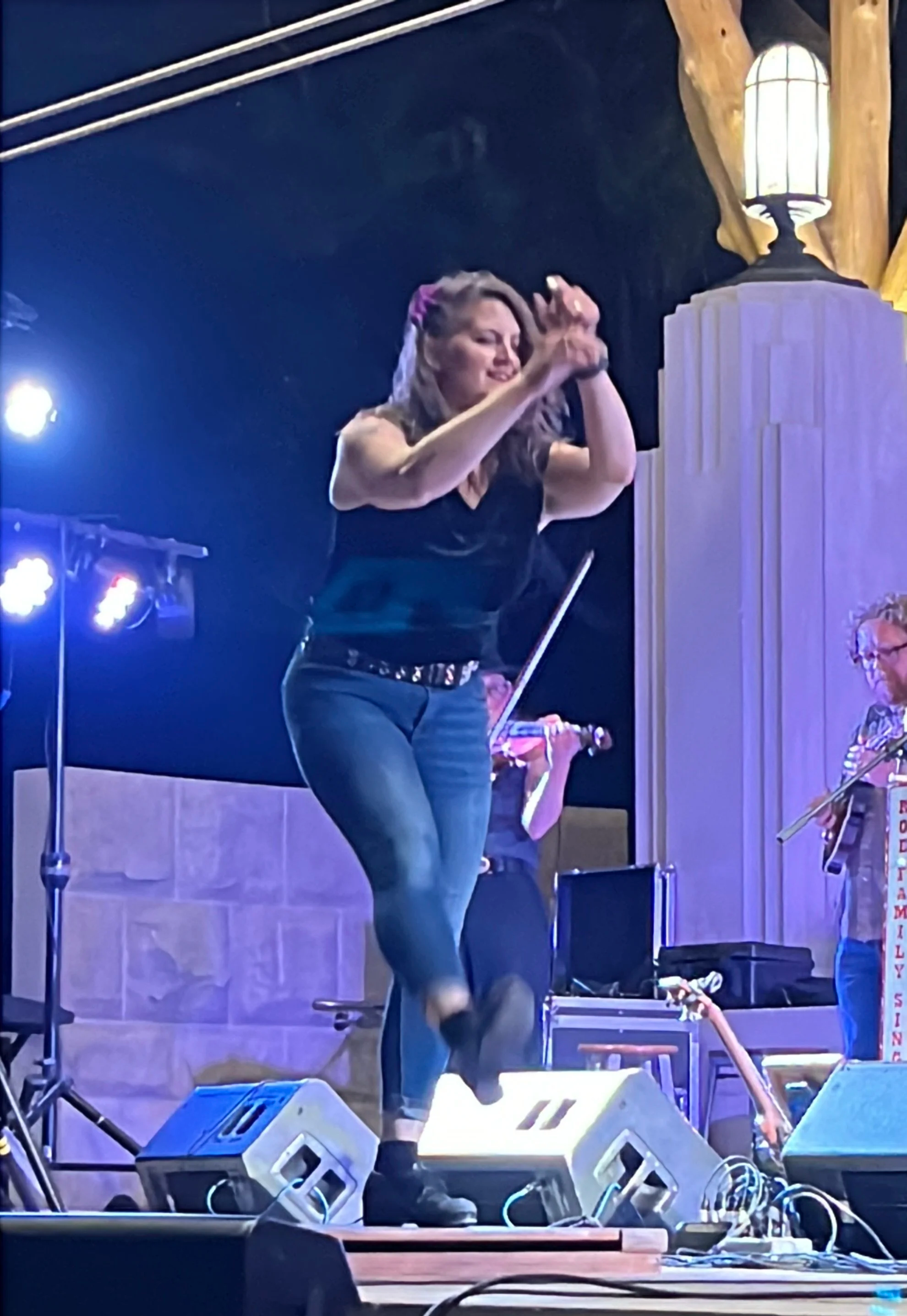
The final act of Saturday night was Minnesota’s own Roe Family Singers. I’ve been to enough of these festivals to know this is a plum spot but a tough one. The crowd is overstimulated, flagging and thinking about bed, so the act needs to be ready to yank them up by their collars and get them on their feet. I’m proud to report the Roe Family Singers pulled it off with spirited modern bluegrass and old-time originals and covers, Kim Roe’s nimble clogging, and a Dolly Parton classic (“9 to 5”) that got a bunch of people up dancing and singing. Even on my 12th hour of live music, I couldn't tear myself away until the very end.
Day Three
On Sunday I started with a song swap on the theme of songwriting, featuring Duluth artist Ross Thorn, Nashville’s Maya de Vitry and Twin Cities multi-talent Taylor James Donskey. They shared bits of insight about their process and inspiration but mostly let their remarkable songs speak for themselves, which was perfect. Three very distinct styles somehow sounded like they were meant to be on the same stage, and they played off each other’s moods and themes the way the best rounds performers do.
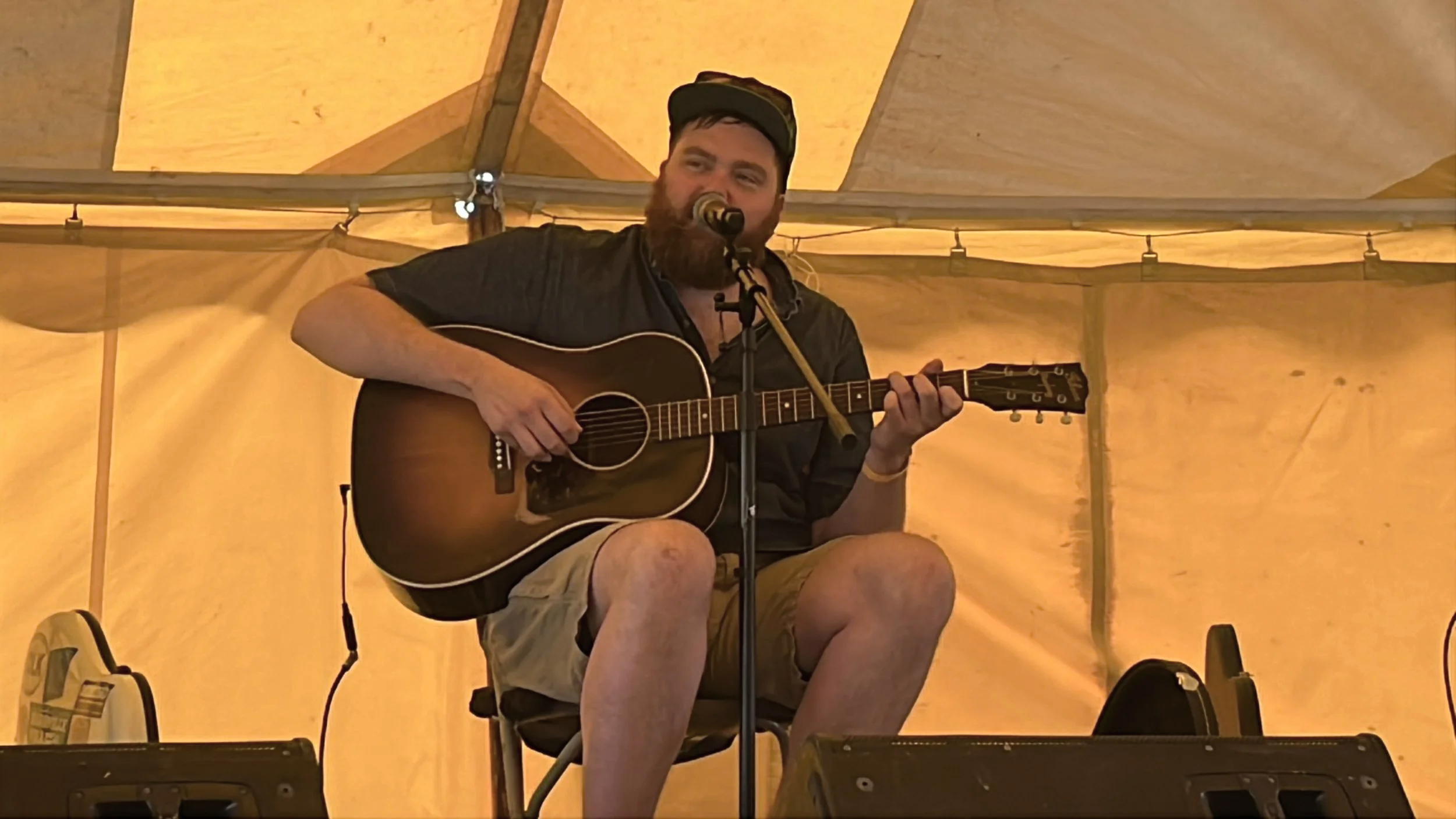
My final set of the weekend was a song swap on the theme of humor, and no one could’ve done it better than chaotic besties Susan Werner and Vance Gilbert. This set was smart, stupid, gross, satirical and crying-laughing hilarious from beginning to end, and the end itself was a bonkers duet in which they sang two different songs simultaneously. The festival carried on without me because I had to get home, and I was sad to miss the music still to come, but this was one hell of a high note to end on.
The artists at Great River took me on an emotional journey this year, and it was a great one. After 50 festivals, it still has everything that won me over in 2019: sunsets over the Mississippi River, a relaxed but cheerful atmosphere, attentive listening crowds, intimate song swaps, an unabashed folkie focus on protest and justice, and a caliber of artists that’s hard to believe at a festival this size. The festival has a loyal following, but I’m surprised more Minnesotans don't make it part of their annual summer plans. If you’ve never been, here’s your invitation to drop a reminder on your calendar for next August. Here’s to another 50 years!
Credit for all photos: Carol Roth.
ABOUT THE AUTHOR & PHOTOGRAPHER
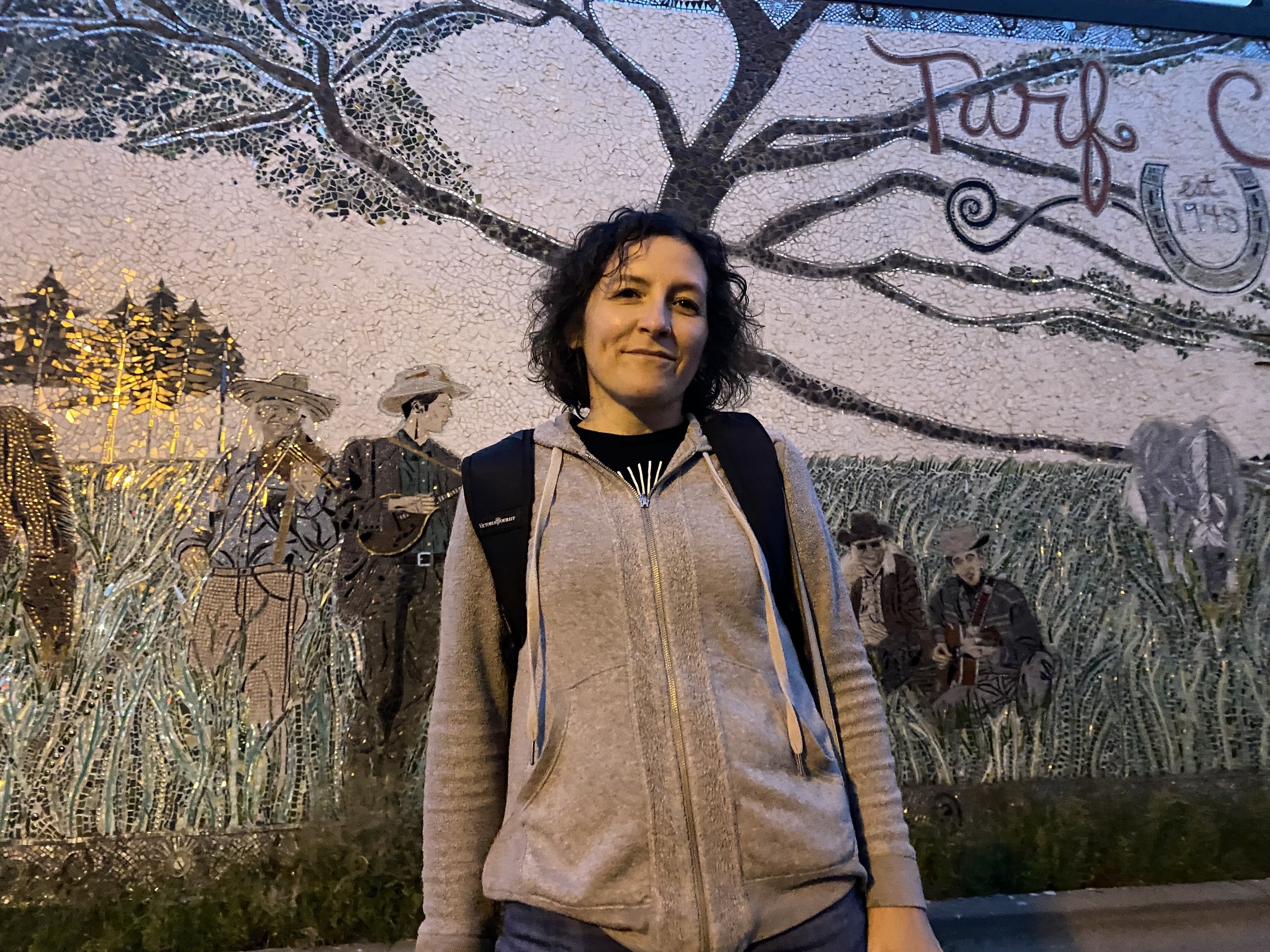
Carol Roth. Photo credit: Dan Lee.
Adventures in Americana co-founder Carol Roth is a novelist who publishes both under her name and the pseudonym T.A. Berkeley in a range of genres, from horror to thriller to YA. She loves to play guitar and sing and occasionally write songs. Her wide-ranging passions also include vegan cooking, personal finance, watching queer romance TV/movies and learning to speak Thai. By day she’s a marketing writer/brand strategist.