Artist Interview: Q&A With Allison Russell
The Grammy-winning singer, songwriter, poet, activist and multi-instrumentalist talks about her new album, In the Hour of Chaos, and her upcoming show at First Avenue in Minneapolis on November 1.
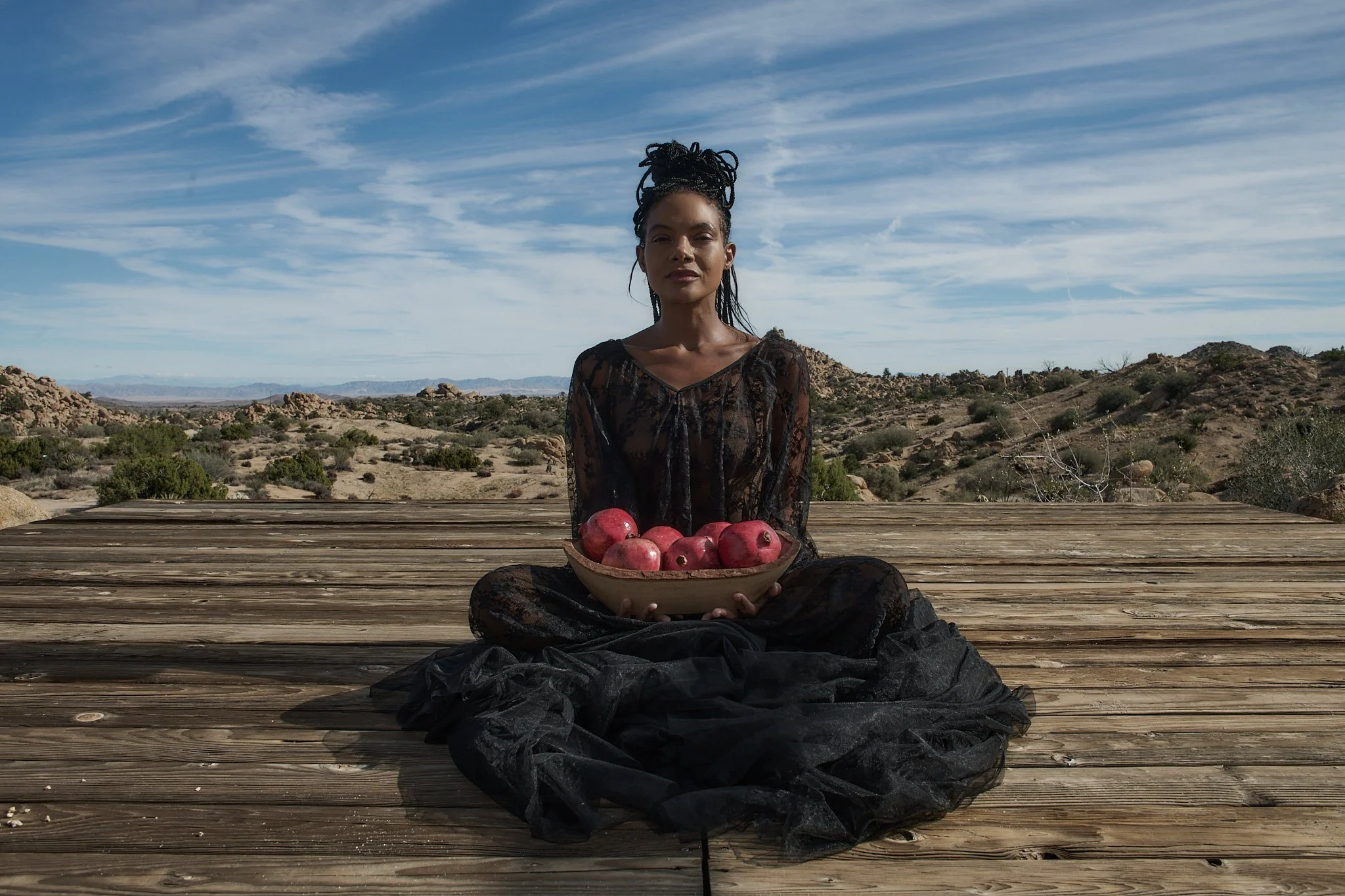
Allison Russell. Photo credit: Mason Poole.
Allison Russell’s history with First Avenue stretches back to her Birds of Chicago days, when the band opened for Valerie June. Russell got an unforgettable introduction to the venue’s Prince connection by sitting on his purple motorcycle. She later returned to First Avenue on her own tour; other Twin Cities stops have included opening for Hozier at the Xcel Energy Center.
On November 1, Russell brings the In the Hour of Chaos tour to the legendary Minneapolis room. The new record turns from the intensely personal storytelling of her earlier solo work to focus on the people around her and the ways they find joy and connection during difficult moments. The album reflects that communal spirit through an expansive group of collaborators, including Joy Oladokun, Norah Jones and Sara Watkins.
Ahead of her return to Minneapolis, Russell spoke with Adventures in Americana about In the Hour of Chaos and the community behind it.
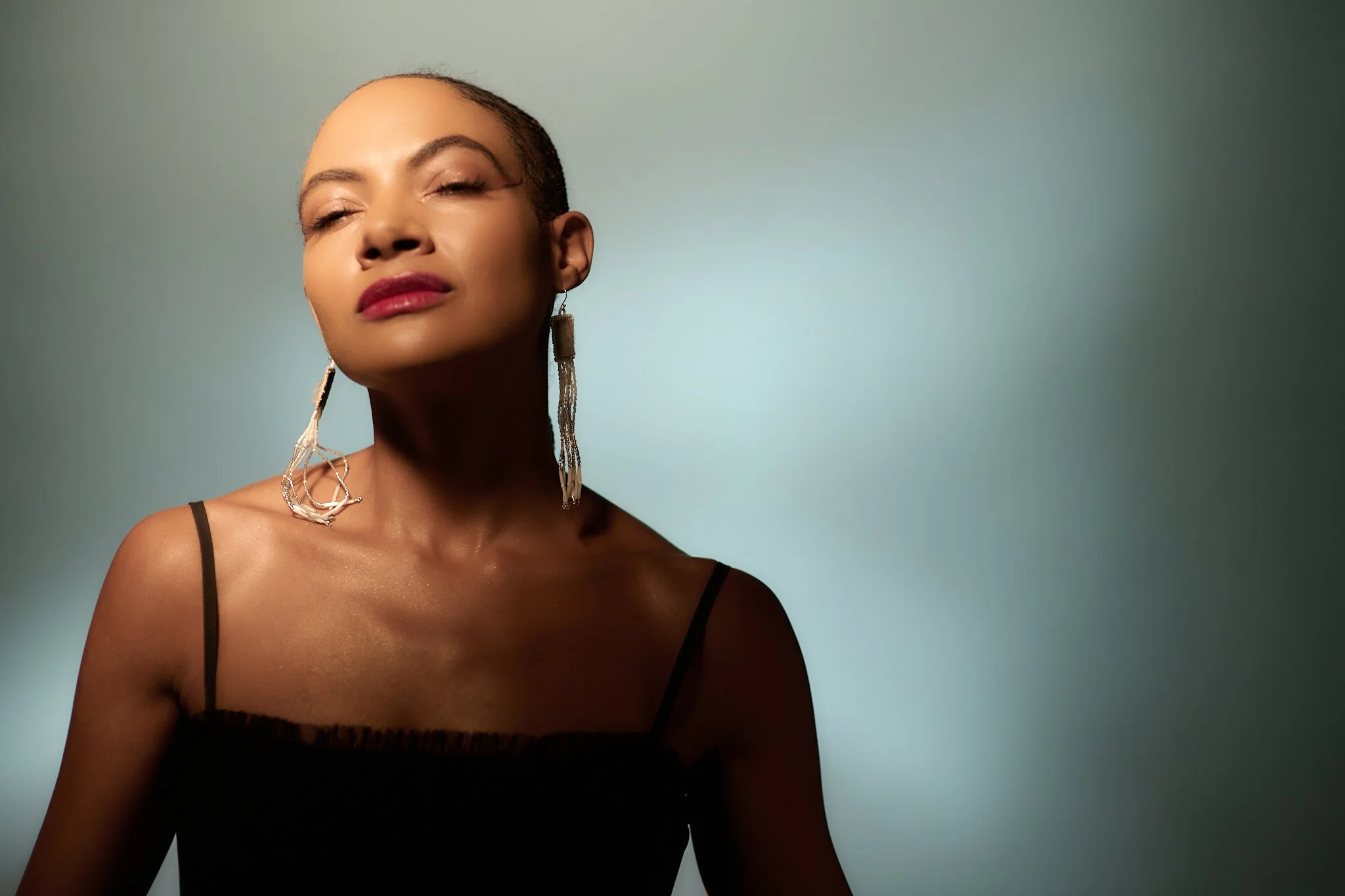
Allison Russell. Photo credit: Mason Poole.
Adventures in Americana: Your first two records felt very deeply rooted in your own history, the survival and healing. With In the Hour of Chaos, it feels like you widened the lens toward what we are collectively all going through. When did you realize the next record needed to look more outward than the previous two?
Allison Russell: I don’t think I’m ever realizing anything beforehand. I think I’m discovering it as I go. What I really felt was this deep need to be making music with my community and my friends. I wanted to lower the cortisol for myself and for those I can reach with my little sphere of influence.
These are obviously miserably hard times that we’re going through. Y’all have been on the front lines of that and really modeling how to care for our neighbors and show up for each other. I’ve been so in awe of the Twin Cities and the way that y’all have been standing up in this time that’s a backslide into fascism, but I have a lot of hope too because I think it’s sort of woken us all up. I think we can take so many of our civil liberties and human rights for granted and forget how extremely young they are, what a young idea that is in our human species.
Basically, we all need community. There’s no such thing as pulling oneself up by the bootstraps. We pull each other up. We take care of each other.
I was also feeling very lonesome. Since Outside Child came out, I’ve basically been on the road nonstop for almost five years, and then I did two stints on Broadway in Hadestown. I’d been missing my community and my family.
What you’re hearing on In the Hour of Chaos is this gathering of overlapping circles from all the worlds I’ve been moving through over the last five years and all of these extraordinary artists that I’ve been privileged not just to work with, but to call chosen family.
AiA: Community has always kind of been important in your music and this album almost makes community part of the instrumentation—Joy Oladokun, Brittney Spencer, Norah Jones, Kara Jackson, Kyshona, Sara Watkins and so many others that are woven throughout it.
AR: Wendy Melvoin and Lisa Coleman are all over this record as well. Talk about First Avenue and Prince and the Revolution being all over this record.
AiA: What do you think that you can express through another person’s voice and talent that you can’t necessarily express alone by bringing these people in?
AR: I really do think of this record as kind of like a mixtape for a musical that’s yet to be written. I think that we thrive when we sing together. There’s all of this fabulous science now coming out to back it up, what happens to us physiologically when we are singing together with other humans. It is so beneficial to us, not just spiritually and emotionally, which obviously we all know intuitively, but physiologically, it boosts our serotonin and it boosts our oxytocin and it lowers stress hormones in our body. It’s incredible.
So I just think I want to hear these voices move me and help me keep going when I’m having a hard day. I wanted to hear them singing back at me. I wanted to be in conversation with them. It was so life-giving and hope-giving to me.
I’ve never been particularly interested in standing solo. My solo career is solo in name only. It’s always been communal. The whole is greater than the sum of the parts. What keeps me coming back is that joy in collaboration and the magical things that happen when you let go of trying to control every little thing and trust that the people in the room have something brilliant and beautiful to say or sing that you couldn’t necessarily come up with on your own.
AiA: You’ve talked through your music about survival for years. On this record, survival seems less like simply enduring something and more about maintaining joy, relationships and connection. Has your own definition of what it means to survive changed in going through this?
AR: Yeah, I think that’s really astute. I’m much more interested in surviving being thriving for all of us, for our communities.
I feel like we are collectively intensely disordered because of the level of violence and deprivation happening to so many of our fellow humans, and the pain that we’re putting our ecosystems through. We’re dependent upon this planet, and we’re at this critical precipice moment. I believe that we can come out of the tailspin and do better. I really do.
To me now, surviving isn’t just, “Oh, we’re alive, we’re walking around.” It’s that we are thriving together. We are loving this brief and extraordinary experience of being in these bodies, on this planet, in this time together.
The triumph of our species is our ability to collectively, communally cooperate and problem-solve. That’s what is magical about us. I want to really lean into “the more we get together, the happier we are.” Basically, I’ve become more and more childish. I really just want to get in a big circle and sing songs and hold hands.
AiA: The album closes with “Good Omens,” which feels like it’s arriving somewhere different from where “Rainbows” begins. The order of the songs that you put on this, the sequencing of it just feels really strong. When you sequence a record like this, do you think about the listener going through that journey and where you want to leave us at the end of it?
AR: Well, I’m going to let you in on a secret. There are two sequences. There is the online digital sequence and there’s the vinyl sequence, which is different. The vinyl sequence is basically my artist cut.
But yes, definitely it’s a journey and an emotional arc. In both versions, “Good Omens” is the closer because there was nowhere else it could be.
To me, it felt like that’s the aspirational hope for the future. We can be good ancestors if we choose to be and if we can come together. I’ve learned from Indigenous siblings who have taught me about thinking seven generations ahead. You’re not thinking about the actions that you take today as just being for you or your immediate circle. We should be thinking about seven generations of life on this planet ahead.
To me, that’s sort of the good omen.
AiA: The title In the Hour of Chaos feels very deliberately rooted in this moment, but as you’ve mentioned, we have to think ahead. Years from now, when people return to this record, outside of the circumstances in which it was created, what do you hope remains universal about this album?
AR: I just hope with all music that there’s something in it that someone will hear and think, “Oh, I don’t feel so alone now,” or “I feel seen,” or “I feel heard,” or “I feel loved.”
Of course, nothing you make is going to be for everyone, and that’s fine. But I hope that whoever needs it in a certain moment finds it in time. I hope it helps some other humans sometime down the line feel less alone in the world.
AiA: First Avenue is one of those rooms where the audience can feel extremely close, even though we’re all standing in a larger venue. In a show centered around connection and community, what do you hope someone walking out of the show will leave with and carry into their own life?
AR: I’ve been doing this for so many years in different iterations now. My first baby band, Po’ Girl, we started 23 years ago in 2003. I now meet beautiful young adults who are like, “I grew up listening to you.” It’s thrilling.
What I love is that people find community. When we are together in real life at a show, to me, it’s not just a concert. It really is a creative communion. People meet each other in real life, and sometimes friendships blossom out of that. Marriages have blossomed out of that. We’ve met people who say, “We met at your show and now we’re married.”
I hope people find that sense of real, in-real-life community and feel more hopeful that together we can build the world we dream of. I hope people find community and feel some joy. I hope they can let go of some of the care and worry for a couple of hours. I just hope that they leave feeling a little better than they came in.
AiA: Tell me a little bit about Autumn Nicholas, who’s opening that night. What should people come early for?
AR: They should not miss Autumn Nicholas, and you don’t have to take my word for it. Brandi Carlile loves them too. They’ve been selling out their shows all over Nashville. They have a beautiful, crystalline, transporting voice.
They sing on “Love Is a Golden Lion” on the record as well. They’re in the big choir there, and they’re just truth and beauty. That’s Autumn Nicholas, and don’t miss it.
AiA: Thank you so much for your time.
AR: I’m so happy to talk to you. Thank you.
About the Author

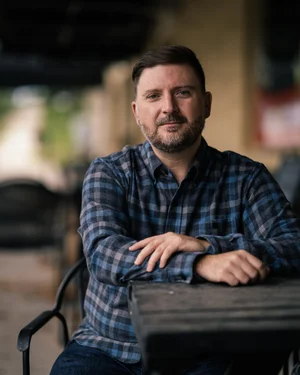
Tom Smouse. Photo Credit: Chris Taylor.
Tom Smouse is an innovative collaborator with 20 years of experience in the Minnesota music industry. As a professional photographer, podcaster, and music journalist, sharing stories from the community remains his core passion. When not at a show you can find him at a record store.