About That Song: Turn Turn Turn
About That Song #106
In our special series, singer-songwriter Sarah Morris interviews artists about the songs that shaped them.
Hi! I’m Sarah Morris. I’m wildly in love with songs and the people who write them. There have been a few songs in my life that have been total gamechangers—songs that made me want to be a songwriter and songs I’ve written that made me feel like I am a songwriter. About That Song is a space where I can learn more about those pivotal songs in other writers’ lives.
In the 106th edition of this series, I connected with the trio known as Turn Turn Turn, a supergroup made up of Midwest artists each with successful careers under their belts! We talked about influential songs, experiences and artists as well as their songwriting process and songs from their most recent album.
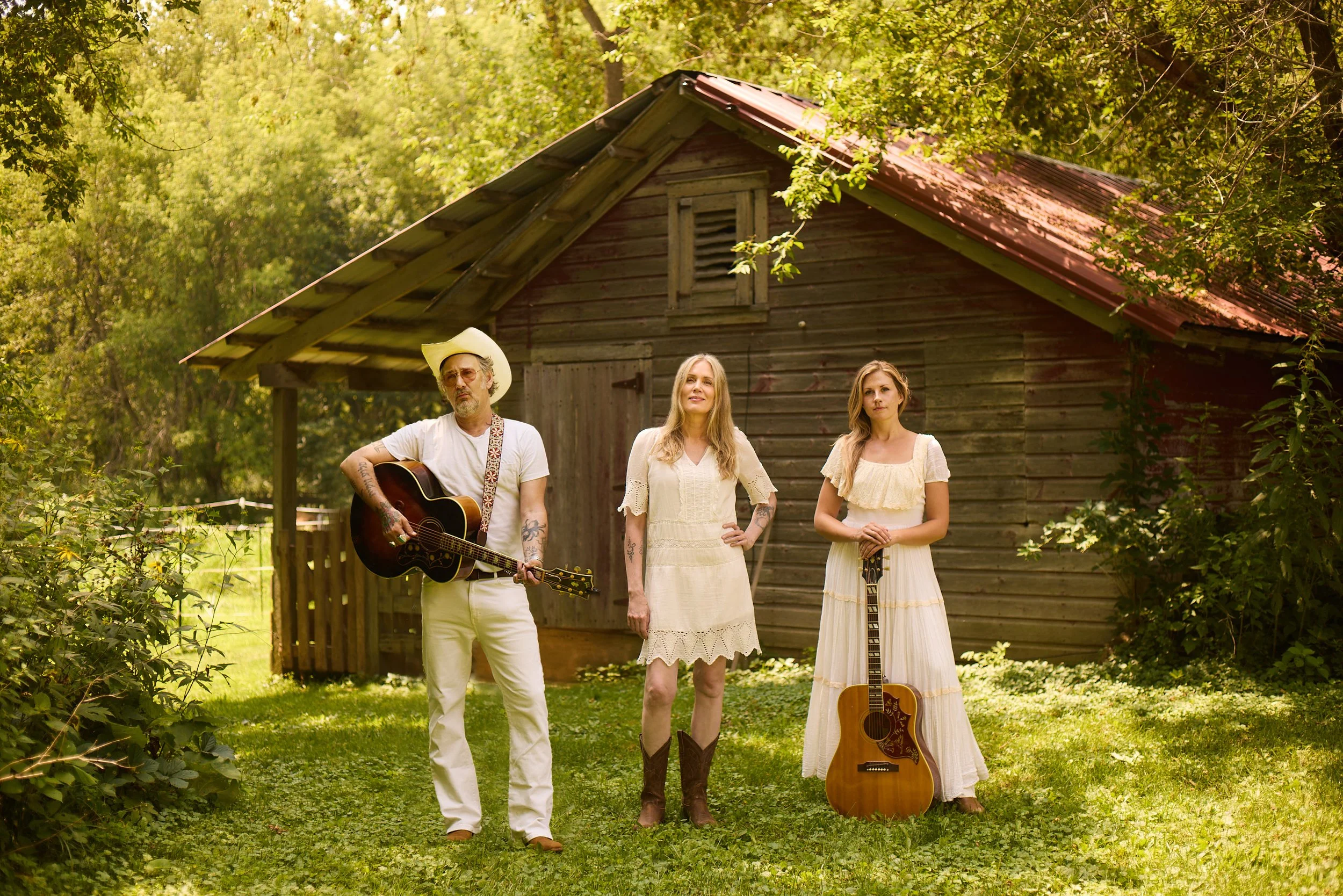
Turn Turn Turn. Photo credit: Maximillian Menacher.
Sarah: Adam Levy! Savannah Smith! Barb Brynstad! Individually, you’re incredibly talented and accomplished musicians. Back in 2019, you came together as a trio, and the superstar force of Turn Turn Turn was immediately felt in the Midwest Americana/roots music scene. This past March, TTT released its third album, All Hat No Cattle. You celebrated by throwing a whole month’s worth of release shows at the beloved Minneapolis venue Icehouse. I’m hoping you’ll continue to celebrate by answering a few questions about your musical journey(s) and the songs that brought you to where you stand today.
Do you remember the song you heard that made you want to be a songwriter? Tell us about that song.
Barb: I don’t remember exactly what the song was, but I had an obsession with The Beatles during my teens. I couldn’t believe they could churn out so many magical songs. Around the same time, I was learning to play guitar, so of course, I had to take a stab at songwriting.
Adam: I fell in love with the music of The Beatles at 12, and they still inspire me and introduced me to so much music—classical, folk, soul, world music. The Rolling Stones were a close second—they led me to country, and then I had to get my hands on the original stuff. Cool grooves, British folks reinventing American music. It’s been my life journey, trying on different stylistic hats, rhythmic feels, subject matter that weren’t just about sex and love. They taught me that. And Dylan taught me that everything and anything can be a song—words can hit us at so many levels: literal, surreal, revelatory, historical, emotional, exhortive … I love teaching songwriting and introducing folks to different paths in songwriting—on different instruments, writing lyrics first or writing lyrics after all the music has been created, experimenting with differing feels and rhythms, writing on different instruments.
Savannah: I’ve been writing songs since I could sing, but I really started to take songwriting more seriously in high school. I used to spend all my tip money on Paste and American Songwriter magazines back when they had the sampler CDs. I think I was a senior when Josh Ritter released the song “The Temptation of Adam.” I listened to it on repeat for probably three days in a row, just soaking it all in. I was so blown away by his lyrics. I knew that was the end goal for me, I would spend my musical career trying to write a song that powerful.
Sarah: Once you each began writing, did you feel like a writer immediately? It took me a few years of writing before I believed it—was there a song that gave you that “a-HA! I AM a songwriter!” moment? Tell us about that song.
Barb: Yes and no. I played in original bands in my early twenties, and we performed my songs. And I wrote a ton of songs, so in that sense, I felt like a songwriter. But then one of the more successful bands I played in wouldn’t let me contribute to the songwriting, so then I felt like I wasn’t a songwriter. But then a few of my musician friends asked if they could perform my songs, so yes! I was a songwriter again. Then I took a long break from music and wrote zero songs. Now, I usually refer to myself as a bass player who writes songs, so apparently, I’m still unsure.
Adam: I wrote so much crap as a kid. Trying to be clever or emotional and pretending to be deep … I think there are some teens who are naturals or who find a unique, personal and authentic voice as songwriters—but most of us need a lot of hours of working on the craft and just living through love and death and massive heartbreak in order to start singing from the heart.
When I look back at things I wrote where I felt like maybe I was on to something, I think it was a song or two from the first Honeydogs record … sometimes we know it when we write it, that what you just made is solid. I think sometimes the proof is in how folks react to your songs—playing for a very critical sibling, or the first time you play a song publicly and you can tell the song is resonating with the audience. I always say “I haven’t written my best song yet”—it keeps me hungry and searching.
Sarah: I appreciate that a whole lot. I hope to write songs for many years to come, and the idea that my best song is still out there, waiting to be written, is pretty thrilling.
Savannah: It took me a really long time to really consider myself a songwriter—I still struggle with it. I don’t know if it was “the” moment but a memorable one was watching “Fourteen” come to fruition. For so long it was a little melody I was humming in my head over and over. Watching it become a full-on song in the studio was amazing and in that moment I did truly feel like a songwriter.
Sarah: Barb, Savannah, and Adam—with decades of accomplished artistic careers among you—in 2019, you formed Turn Turn Turn. What came first, the band or the songwriting? Was there a particular song you wrote together where you realized you’d found a singular artistic voice?
Barb: The band came first! We started as a cover band, so we were focused on performing the close harmony ’60s and ’70s country, folk, and pop covers we loved. Adam and Savannah both had successful solo music careers at that time, so I suggested we augment the setlist with their original material. And the rest is history.
Sarah: Ooh! I didn’t realize that Turn Turn Turn was covers-centric in the beginning, and that the originals were an outgrowth of that experience. Tell me more, please!
Adam: It feels like becoming an originals band was kind of accidental for us. We ran out of songs one night at a multi-set show, the audience wanted more, and Barb said to Savannah, “Play one of your originals.” I bristled because I thought we were just gonna do covers. But when I heard how great Savannah sounded, and how the audience responded, a light went off. We’ve co-written songs, and we will probably continue expanding that aspect of the band; but for Savannah and me, songwriting is generally a private process. I want to push myself into more “being in the room at the same time” bouncing ideas and shaping songs. We came together to sing our favorite covers…and we’ve become a collaborative songwriting machine, thinking about exploring different musical paths together.
Savannah: Can’t Go Back is the perfect sonic representation of us coming together as a band. We each bring something a little different to the table. We blend in a way that’s so different than what anyone else is doing and I think that’s what makes us stand out. It’s been fun to watch that unique sound evolve.
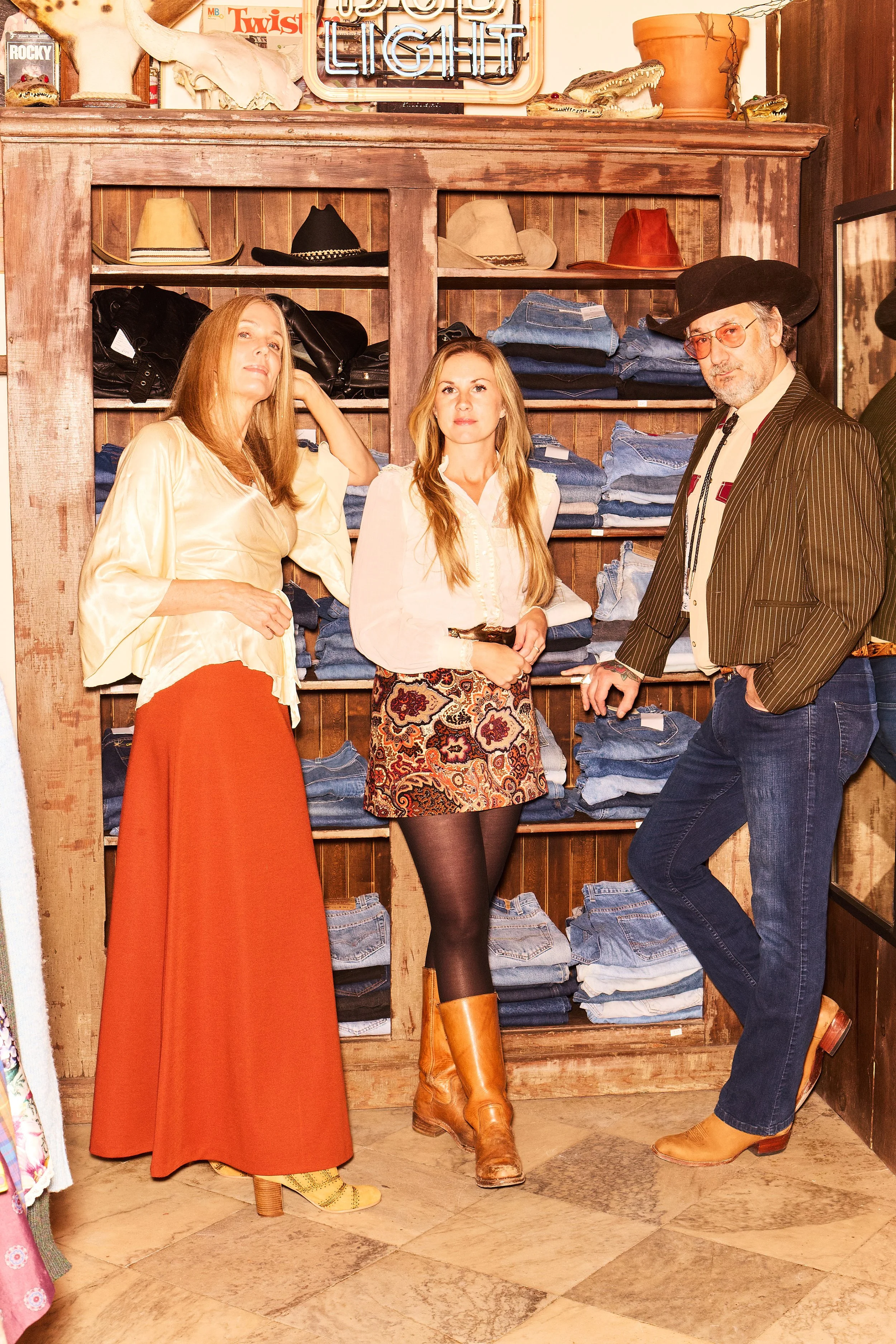
Turn Turn Turn. Photo credit: Maximillian Menacher.
Sarah: Let’s dive into your new album! Barb, on “Hungry Ghosts” you sing, “We used to be such shiny things, before we got all tangled in each other’s strings.” The song has this bit of sweetness, which (to me) makes any sorrow of lost love go down a little easier. Can you tell us about that song?
Barb: It started as a “complicated love song” to my elderly cat. I inherited her when my sister died, and sadly, I’m very allergic to cats. The song morphed into how we can love a person (or cat) deeply, but also feel a sense of relief when they’re gone, knowing it was never meant to be. In relationships, we can start out fresh, shiny, and hopeful, but then let ourselves get dulled over time by staying in situations that can hurt us.
Sarah: I’m a fan of complicated love songs, because … well—love IS complicated. You really did a wonderful job of bringing that to life, Barb.
Savannah—I lived in Nashville for a few years, and I fell in love with the magnolia trees all around. I remember telling one of my bar regulars how I wished for one of my own. (She cheekily explained that I should always want a magnolia in my neighbor’s yard, because while they are beautiful to look at, they are a lot of work to clean up after.) In “Magnolia Tree,” you sing, “And I’m so far from the road they laid in front of me / But one day, I swear to God / I’ll get my magnolia tree.” Can you tell us about THAT song?
Savannah: That’s exactly where the song bloomed (haha) from! I have also always wanted a magnolia tree in my yard and in the song, I used that as symbolism for my version of the American dream. I’m in my 30s, childless, unmarried and for some reason having to explain myself for that. My life looks a lot different than I thought it would when I was a child, but I’m very happy with the path I’ve taken. I’ve lived a lot of life and there’s still time. So many people have told me they relate to this song, it’s amazing.
Sarah: It’s a special one, and I can absolutely understand people reacting in that way.
Featuring guitars that take us on a road trip to the Wild West—maybe also to California in the 1960s—and lyrics that reference the Old Testament, “When Love Reigns” weaves a magic spell on the listener. “Fires die / hearts rearrange / All is fair game when love reigns” … Adam, can you tell us about that song?
Adam: That song is kind of a nod to ’60s country pop, so you hit the nail on the head. Thematically/lyrically it’s about the transience of being “in love” and how that impulsive, desire-filled, house- and world-wrecking human state comes and goes sometimes with little human agency. I had to reference biblical characters! Jacob, Rachel and Ruth had a complex thing going.
Sarah: Indeed, they did!
Adam: As I’ve grown as a songwriter, I’ve written more songs about love than about being in love—kinda meta—because early in my career that’s all I did was write “heart on my sleeve” songs about the flammability of love. So the nature of love in its myriad forms—erotic, familial, spiritual, social—is a place many of my songs go. My most political songs often are framed in terms of relationships or problems with a partner, but there’s layers of meaning. Kinda like parables or something.
Sonically I love exploring the reverbs, echoes, room sounds and instrumental textures of those semi-orchestral ’60s pop songs, and “When Love Reigns” has a little bit of a kitchen-sink vibe. It’s got the big “Wichita Lineman” six-string bass lick and interweaving acoustic picking … that middle eight was supposed to sound like Ennio Morricone spaghetti Western music, maybe slightly tongue-in-cheek featuring our favorite whistler, Savannah Smith; she stole the whistling crown from me (but that’s another story for another interview). The song moves really fast and changes keys which makes it feel urgent to me.
Sarah: Do you have any upcoming Midwest shows where we might hear you sing these songs?
Barb: We’re playing at the Cedar Cultural Center on June 5th with openers Triple Fiddle, and we’re really stoked to play with them. Jillian Rae will be joining us on fiddle for that show, and we love how she elevates our music.
Sarah: That will be an exceptional night of music! Jillian Rae elevates any project she’s a part of, it’s true. She’s pretty fantastic that way!
Barb: Beyond that, we have a ton of great shows this summer: in The Belvedere Room at Crooners, with the Honeydogs in St. Croix Falls, with Cole Diamond at The Turf Club, at an Eau Claire college, in backyards in the Twin Cities, at the Special Olympics in June in Wyoming MN, and at a big Silver Bay event … we’re gonna be all over the place. And by the time people see this, all the info will be on our band calendar.
Sarah: Perfect! We will send readers to your calendar! Readers, if you are anywhere near a spot where Turn Turn Turn is performing, do your best to get there. And Barb, Savannah, Adam—thank you for stopping by to talk about all those songs. Congrats on the new album!
Listen to “Hungry Ghosts”
All Hat No Cattle Album Credits
Recorded and Produced by Adam Levy
Mixed and mastered by Chris Furst
With additional recording by Josh Kaplan, Patrick Tanner, Joe Savage, Peter J. Sands, and Chris Furst.
Turn Turn Turn is Barb Brynstad, Adam Levy, and Savannah Smith.
ABOUT THE AUTHOR

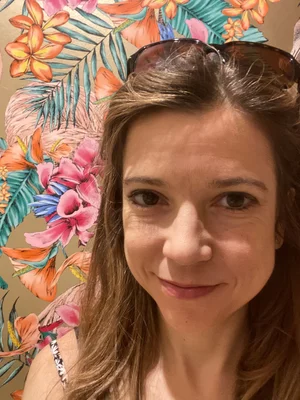
Sarah Morris. Photo credit: Tom Smouse.
Sarah Morris is a superfan of songs and the people who write them, and a believer that certain songs can change your life. A singer-songwriter / mama / bread maker / coffee drinker who recently released her fifth album of original material, she’s been known to joyfully sing with people in her Big Green Bathroom.