Virtual Listening Party: Emmy Woods, ‘When the Day Breaks’
Take a deep dive with the innovative Midwest folk artist and reviewer Jacson Miller into the meaning behind (and making of) Woods’ profound new album.
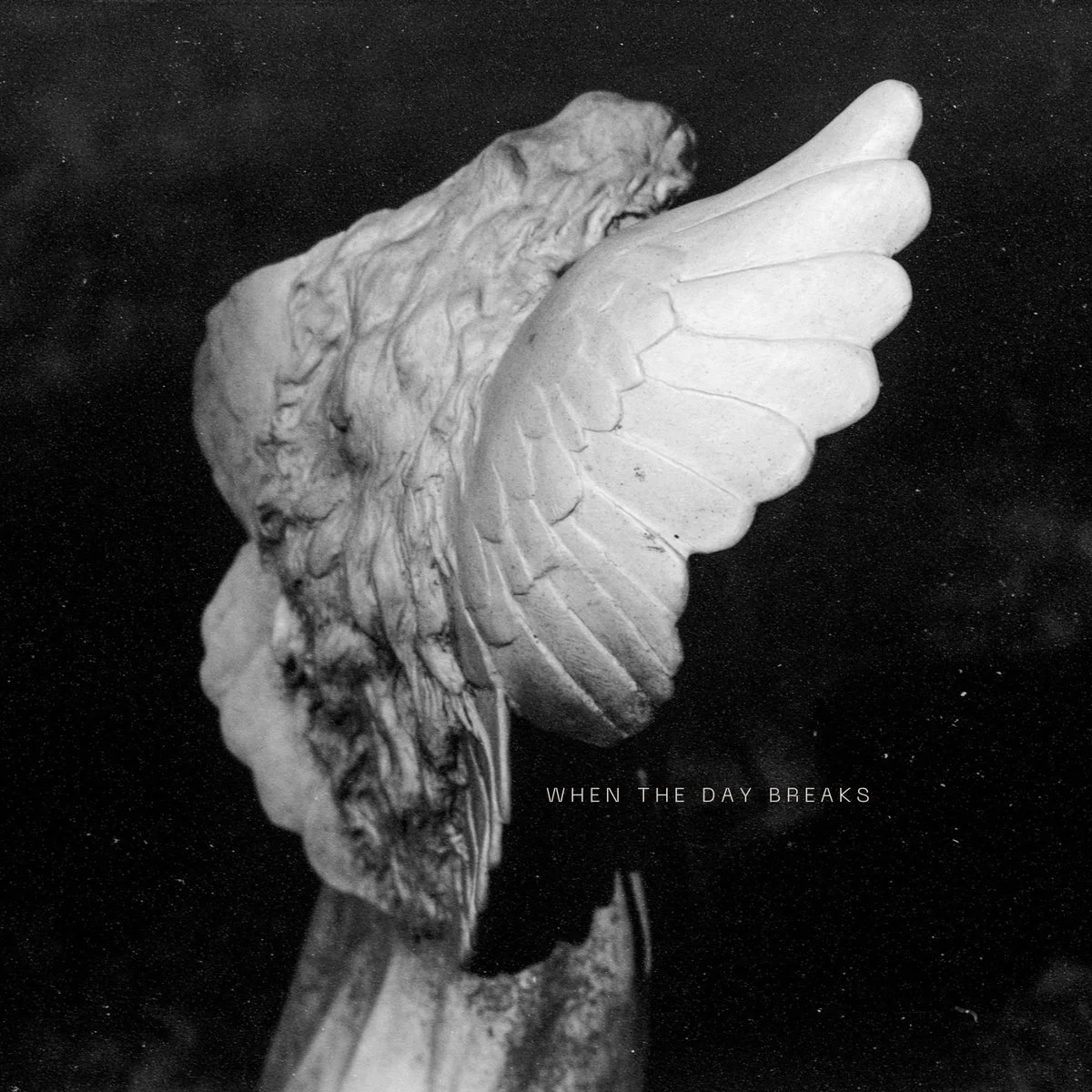
Emmy Woods’ When the Day Breaks album artwork. Photo by Al Adlard.
Emmy Woods, one of the fastest-growing wildflowers in the thriving Midwest Americana music scene, dropped a shimmering dewdrop of a record this January, called When the Day Breaks.
Emmy is an artist near and dear to my heart. The first article I wrote for AiA in 2023 (about Eli Gardiner) brought me to Plum’s Neighborhood Grill & Bar in St. Paul one Sunday night for Nick Hensley’s MN Songwriter Showcase (which just celebrated its 20-year anniversary this past Sunday, March 22nd!). That was the first of many times I’ve had the joy of listening to Emmy.
Then in January she released When the Day Breaks, a work of art that showcases the emotional depth, beauty, and sheer perfection of her voice and songwriting in a way I’d never heard before. All this beauty is punctuated by sparse, tasteful instrumentation, pushing, pulling, and carrying the listener along on a poignant, loving journey.
Emmy and I had a wonderful conversation about the album one morning, and here’s a walk through this beautiful thing that has filled my ears, mind, heart, and home with so much comfort over the last two months. (Click on each song title to listen along on YouTube!)
1: Between the Bars / Something Stronger
The album begins like a movie, or maybe like a dream, with bells in the atmosphere, easing us into what is about to be an emotional odyssey. The opening lines introduce us to the man who inspired the entire album. He’s standing tall and laughing loud, and yet we feel what’s to come in the emotion of Emmy’s vocals. The scene slowly turns inward from a vivid widescreen to a monochrome sadness and remembrance of the loved one to whom we were introduced, now lost. Then the song ends unexpectedly early, giving way to the heartbeat chug of Emmy’s J-45 in “Something Stronger.”
The two songs are married by the still-present bells. The bells that producer Taylor James Donskey just happened to have lying around, which just happened to be in the key of the song. Actually, this whole album sort of willed itself into existence. It began with Emmy asking her dear friend Taylor to work with her on a single song (“Something Stronger”). It was a special song to Emmy and she knew Taylor could make it what it needed to be. When it didn’t seem complete, Emmy noted she always played “Between the Bars” just before it. She then played both songs all the way through and that is the recording we hear on the album.
That experience led Emmy to continue recording more songs with Taylor over several months. Eventually, after seeing how they were turning out, she decided to release the songs rather than keep them for herself. What started as two friends doing what they loved and needed, became this timeless album we can reach for when needed. The whole evolution makes me wonder if there is something more special than I initially realized in the final words of “Something Stronger”… “So if you’re up there could you send some angels down, cause honey I’m the one who needs saving now
2: White Horse
Emmy says this was written during a time of deep sadness and despair. A time when she felt stuck. As the lyrics say, “time keeps moving, I am not.” She was having dreams that kept her from sleeping well, which is reflected in the haunting cello and violin dancing around one another as if speaking to one another, adding a dreamlike ambiance to the auditory landscape.
3: Somewhere in the Quiet
Emmy explained this song as being born from a spiritual struggle she felt when trying to reconcile the world she thought she lived in and the world that took her loved one. This song is brilliantly orchestrated with cello and violin playing percussive short strums, supporting Emmy's sweet voice, as it delivers lyrics of bitterness and yearning. The strings then unfold melodically into an instrumental chorus, like a trapeze artist transitioning from violent dismount into a safe landing.
4: What Time Won't Erase
“When time won’t erase what you wish would fade.” This song is like a long look in the mirror from a deeply broken heart, presumably making its way through to something brighter. The raw depth of this track feels very necessary on an album that possesses such a clear and important purpose, which is to show those who are grieving that someone has been in this place before, and that things will get better. Emmy’s videographer friend asked to film her and the band playing this song live for his job application. Emmy decided to submit it for NPR’s Tiny Desk Concert, for which NPR recognized it as one of the highlights of the submissions that month.
5: Out of This Place
This might be my favorite on the album. It begins with Emmy’s piano and her breaths, which feel simultaneously soothing and alarming. The musicality is brilliant throughout, especially the violin entering later in the song. But being a lyrical fanatic, it’s the imagery that brings this track to the forefront for me. The T-shirt his mom gave her, his bloodstained denim jacket, and most of all, his Fender with strings she can’t change: Each line has smells, shadows, movement, laughter, and loneliness.
But the Fender runs over and over in my mind, where it exists as light blue. Sometimes it’s morning, sometimes afternoon, and sometimes 10pm. There’s a bed on the left, a window on the right, a beanbag chair for whatever reason, and her hands are usually on an A minor chord. And how is it that the star of this album for me—this guitar—is contained in the only track on the album with no guitar? Whether intentional or not, I can only think that this adds even more to the feeling of loss and the gripping visuals. I love this song.

Emmy Woods. Photo credit: Tom Smouse.
6: Icarus
A supreme dis track of the highest brow, this song is a clear reflection of the feelings of those impacted by the opioid crisis. It’s direct, poetic, thoughtful, and understanding, and it points blame where it’s deserved. The violin adds immense feeling to this track, popping in with authority at all the right moments.
7: Little Moon
If I were to pick a single from this album, it would be this. Its pragmatism and universality make it a song for many situations, and it also might be tied for my favorite on the album. The production features acoustic guitar more prominently than most other tracks. The song’s message is simple: What we have isn’t good, but it needs to be good enough for now. Emmy says it better:
If my sun don’t rise soon
I might need you to be my little moon
won’t you bounce me back a little light
guide me through my longest night
Emmy sang “Little Moon” at her album release concert at The Cedar Cultural Center. I had just finished my beer as the song was starting. I’d normally grab another but couldn’t miss a moment of this song. So I’m standing as one of many in the captivated crowd, holding my beer can. As Emmy sings this song. I notice the empty can vibrating to the music, and when she hits the chorus, the vibration in the can and in the room, and of the weight of the song, became almost overwhelming. It moved me to jot down my own song ideas on my phone, and was truly a moment I won’t forget.
8: Lilies of the Valley
Emmy described how when her loved one passed, she felt his spirit with her constantly. Then, as time went on, that feeling began to fade, and this song is about that transition. She sings directly to that spirit in the opening line, “Where you goin’, don’t leave me now.” The song moves quickly into imagery-laden scenes, similar to the opening track, although in this song, the memories feel black and white and the present more vivid. Sadness and longing remain, but there’s a strong sense that we’re emerging from the depths. The refrain is a heartwrenching self-revelation of this emergence: “Oooh, could I love you any more? Not anymore.”
9: Still Listening
This song continues the release of and movement away from sorrow. Still in it, but moving forward. We know this is about the passing of a loved one, but I mentioned to Emmy that this track could work as a breakup song as well. The words speak only of two people who are no longer together and the longing to reunite. Emmy said this was the first song written on the album, and there’s no mention of death because it was so difficult to recognize out loud that he was actually gone at that time. The song ends beautifully, as it is throughout… “give us our place in the sky, in a better place over a better time.”
10: When the Day Breaks
Emmy describes this song as a combination of things she wishes she’d said to her lost love, and the things she felt she also needed to hear. It’s ultimately a song to help people feel compassion for themselves when dealing with addiction. Emmy explained the difficulty of addiction, and that there is a tremendous shame spiral when a person relapses, noting “You kind of lose hope when you’re in the thick of addiction, and you feel like you can never get better nor ever be forgiven.” This song is to correct that myth. The chorus says it all perfectly.
When the day breaks
on all of your mistakes
ooh you feel like the devil has won
don’t you dare go thinking that’s the person that you are
no that's just the things you've done
And when the night falls
And you feel like giving it all up
Cause nothing good ever lasts
Just keep the faith, you know there’s truth in the clichés
This too shall pass
11: Like You Do
This is Emmy’s favorite song on the album to play live. She said it captures an important moment in her grieving process, focusing on the love she carries for the sweet and kind person who slipped away too soon. As I listen, my breaths become easier. It’s the only song that features a ukulele, and the horns give it a lovely celebratory sendoff. The entire album is heavy, deep, and moving, but this track is a clear transition and a perfect ending to this perfect work of art.
It has been an honor to write this article and help give a little more background and context on Emmy’s new album, a masterpiece that was not planned, but rather pushed its own way into existence. It pushed its way into me as well, in a way that drove me to write my first article in over a year. It exudes love, healing, truth, and hope, and my wish is that it gets into the ears of all who need it, because I know there are many and there’s a lot of healing to be had in listening to it. Emmy has pledged all future sales of this album to support harm reduction efforts. She’s already been able to donate hundreds of dollars to Southside Harm Reduction in Minneapolis through CD sales and hopes to keep donations rolling in. You can pick up a CD at her next show or a digital download on her website.
The photo featured on the album is Angel on a headstone. Discover more of Al Adlard’s work.
ABOUT THE AUTHOR

Jacson Miller. Photo courtesy of the author.
Jacson Miller is a huge fan of great Americana music and the songwriters who create it. He is a passionate supporter of equity in education and youth development as a Board Member of the nonprofit ‘Search Institute’. A long-time resident of Minneapolis, he grew up in southern Indiana, has a Business degree from Purdue University, an MBA from Duke University, and loves being a dad, playing guitar, and songwriting.