The singer-songwriter from the woods of Northern Minnesota weaves family stories, fairy tales and personal experiences into a quietly spellbinding meditation on love, nature and the impermanence of life.
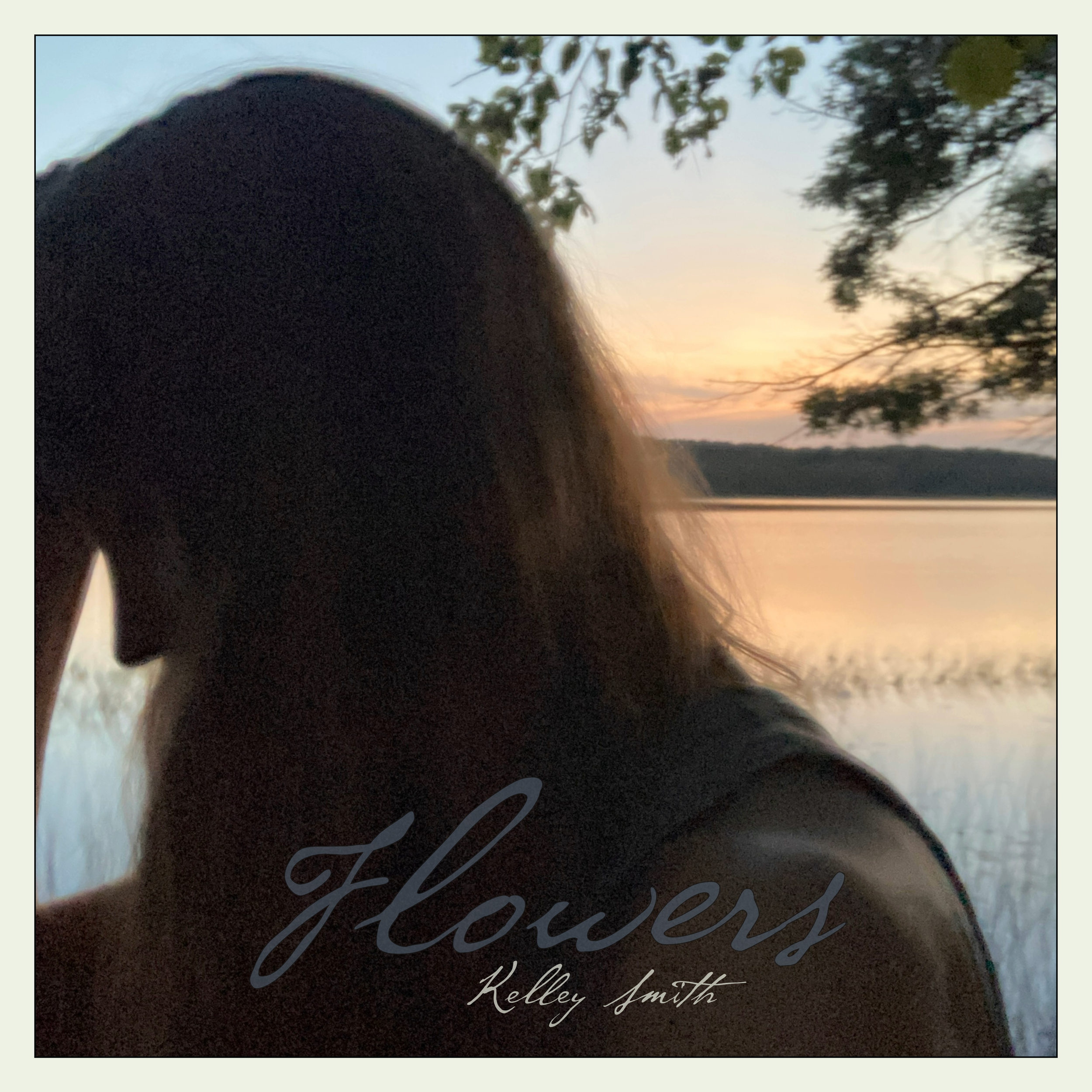
Kelley Smith’s Flowers album artwork.
I was playing Kelley Smith in my car the other day and one of my passengers paused in his conversation to ask who it was. He was impressed by her voice. “Earthy,” he called it.
That moment stuck with me because, while I agreed almost right away, “earthy” isn’t the word I’d ever have come to on my own to describe the northern Minnesota artist’s vocals. My mind usually goes for words like “ethereal” or “otherworldly”—basically the opposite of how my friend described them.
Can a singing voice be both earthy and ethereal? Kelley Smith is living proof that it can. Her vocals are as essentially physical as the sound of a babbling stream or the wind through forest treetops, but there’s something magical about them too: whimsical, but a little haunted at times.
Smith’s lyrics live at the intersection of these two contrasting sensations. Her songs are intensely anchored by nature and family and the real world, but there’s always an undercurrent of—and sometimes an explicit focus on—the impermanence of life. The unrelenting march of time. The constant cycle of decay, destruction, death and birth.
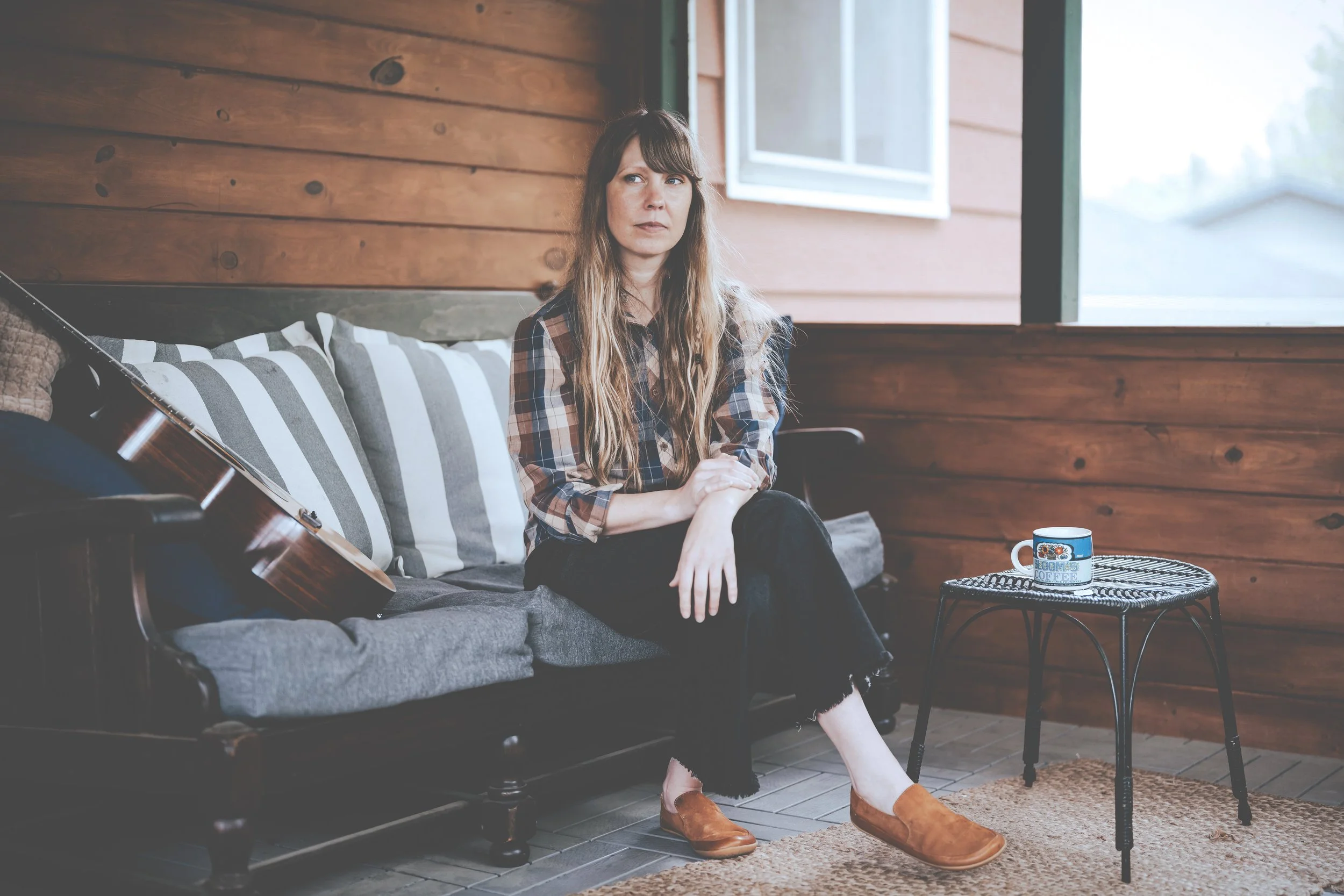
Kelley Smith. Photo credit: Tom Smouse.
Most of the songs on Flowers—her sophomore record and first full album, which came out Nov. 6—are familiar to me from having seen Smith live several times over the past couple years. She often gives some context for the songs—the specific moments, literature or family stories that inspired them. While knowing their backstories enhances the songs, they are universal enough and emotional enough to stand on their own without explanation.
“Lydia” is anchored in a concrete time (“how you wore that flower crown in 1939”) and is specifically about her ancestors, but the story of a child torn from her parents forever is sadly relevant today. She sings wistfully of the tenuous connections of a family separated by hostile forces and borders but bound together by love and blood:
sail away dear Lydia
you have your mama’s eyes
father knows but your babes will only know the tears you cry
Each song has its unique riff on her core themes of love and nature and sorrow and death. “Little Match Girl,” for instance, uses just about the saddest Hans Christian Andersen fairy tale as its foundation, and the story of a child slowly freezing to death as she dreams of being reunited with her mother fits perfectly with Smith’s own stories and ruminations. “Down by the Water” portrays the faith and sorrow of an aging person tending their lover’s grave:
deep in my bones there’s a hope that I’ll hold you again
but darling you know I’m growin’ old slow and I am lonely
Love of the living gets its day on this album too, triumphing over an adversarial world in “Open Hands”:
they say that I have been impatient
for things that they already have
that I should stay within my station
well what kind of love is that
now you’re the only one who sees me as I am
and you’re the only one who loves with open hands
And love is also patient and kind, worrying over and silently supporting a struggling partner in “Left Side of the Bed”:
now wouldn’t my love ease the burdens that you bare
I’ll be undone when there’s nothin’ I can do
but lie on my back while the shadows pull on you
Recurring imagery throughout the album gives it an incantational feel: Flowers appear in four of the nine songs and birds in three tracks; love is called by its name in seven of them. Smith’s evocative guitar work and spare arrangements, including the occasional piano or fiddle, lay her voice and lyrics bare, and that adds to the feeling that a spell is being woven around you while you listen.
Kelley Smith came to recording and performing music a little later in life than most—about four years ago at age 40—and what a boon to the rest of us that decision was. There’s nothing and no one quite like her, and Flowers is a quietly triumphant showcase of her many gifts.
Smith celebrates the release of Flowers in the Twin Cities at The Cedar Cultural Center (Minneapolis) on Friday, Jan. 8, 2027. The Mike Munson Trio opens. Learn more and get your tickets!
ABOUT THE AUTHOR & PHOTOGRAPHER
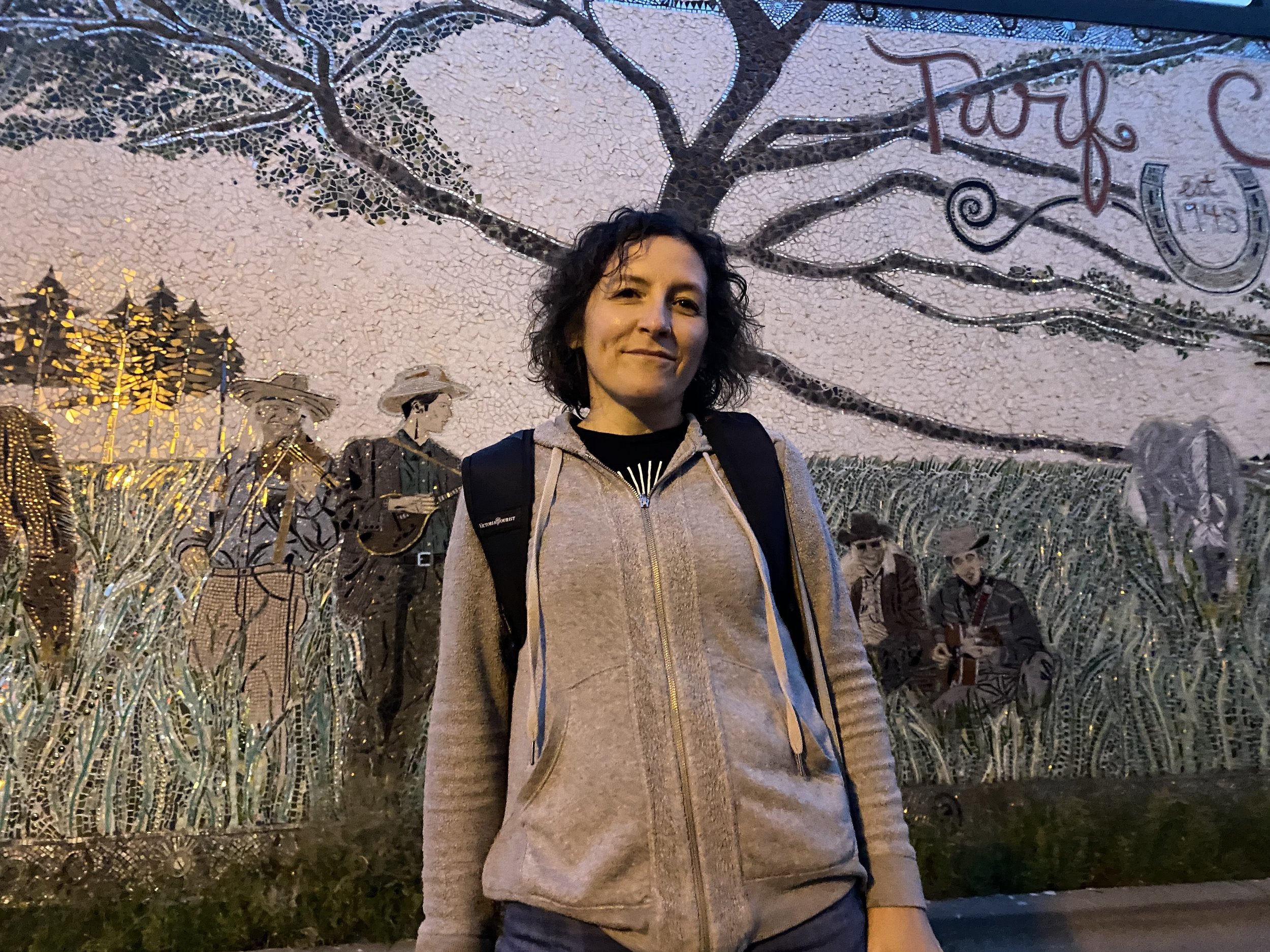
Carol Roth. Photo credit: Dan Lee.
Adventures in Americana co-founder Carol Roth is a novelist who publishes both under her name and the pseudonym T.A. Berkeley in a range of genres, from horror to thriller to YA. She loves to play guitar and sing and occasionally write songs. Her wide-ranging passions also include vegan cooking, personal finance, watching queer romance TV/movies and learning to speak Thai. By day she’s a marketing writer/brand strategist.