The Illinois folk singer-songwriter’s first (and last) album with The Fieldnotes is a snapshot of a band at its best and a showcase of his unique songwriting and singing gifts.
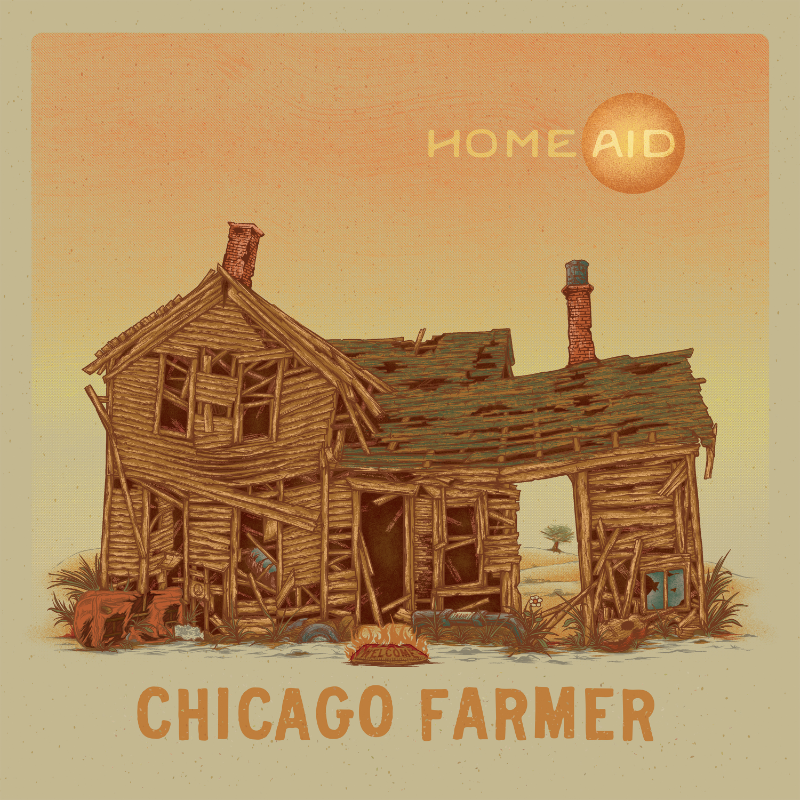
Chicago Farmer’s Homeaid album artwork.
I tend to use the term “storytelling” broadly when describing music. Whenever a song’s lyrics make me feel like I understand how someone is feeling, or vividly describe a setting so I can imagine how it looks, feels, sounds or smells, to me that’s storytelling.
Story songs are a whole different thing, though, and as someone who grew up listening to classic country artists like Tom T. Hall, Johnny Horton and Johnny Cash, they have a special place in my heart. Whether it was epic historical ballads like “Sink the Bismarck” and “Jim Bridger,” heart-wrenching slice-of-life stories like “Trip to Hyden” or “The Year That Clayton Delaney Died,” or humorous yarns like “The Little Lady Preacher” or “One Piece at a Time,” I couldn’t get enough of songs that had the narrative pull and satisfying closure of a complete story.
Chicago Farmer (aka Illinois musician Cody Diekhoff) has the knack for creating great story songs. But he doesn’t stop there; he combines it with the working-class fervor of folk artists like Woody Guthrie and Hazel Dickens and sometimes the giddy but razor-sharp silliness of Shel Silverstein. Chicago Farmer’s sound has evolved and shifted over time, especially when he formed his “Fieldnotes” band, but you can always count on any song of his having one or more of these three core elements: stories, social justice and humor.
His new album, Homeaid, has all three in spades. In fact the opening track, “Tina Hart’s Mustang,” encompasses all of Diekhoff’s gifts and favorite topics in a single song, a small-town narrative of the kind of epic teenage drama that can only happen in a close-knit community. The titular hero is a local drag-racing legend who’s forced to put her coveted car up for sale. It’s a funny but compelling story of rich vs. poor with an empowering twist ending that implicitly upends gender conventions as well.
Another trademark Chicago Farmer story song, this one with a loping country feel, “The Twenty Dollar Bill” honors Diekhoff’s grandparents for their resilience and caring while spinning a (hopefully fictional!) tale of an attempted mugging. The unexpected twist turns it into a bit of a murder ballad while still managing to remain heartfelt and sentimental; only Chicago Farmer could pull off a contrast like this so successfully.
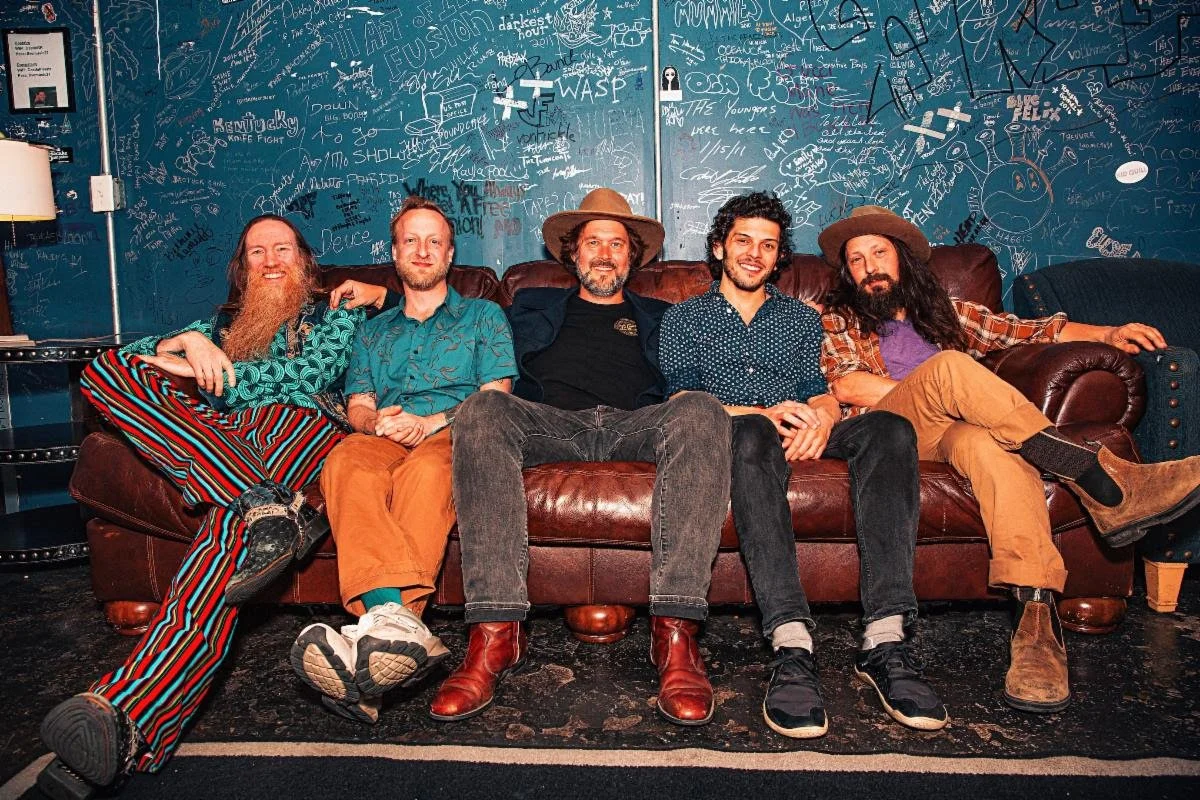
Chicago Farmer and the Fieldnotes. Photo courtesy of the artist.
Notably, this album is the first to feature the Fieldnotes. The group formed shortly before the pandemic and has toured together ever since, but Diekhoff recently announced its imminent disbanding after this tour due to conflicting commitments and careers that were making it too hard to continue.
As bittersweet as it is, that makes Homeaid an even greater gift. The contributions guitarist Jaik Willis, bassist Charlie Harris, keyboardist Cody Jensen and drummer Frank Kurtz have made to the Chicago Farmer sound deserve to be immortalized on a record. Chewy and textured, with rich grooves and combustible instrumentals, Chicago Farmer and the Fieldnotes combine their fiery talents into a full-on conflagration—on stage and on this record.
Ironically, those talents come together especially well on “Peshtigo,” a moody and foreboding midtempo rocker about a devastating fire that broke out in Wisconsin on the same day in 1871 as the Great Chicago Fire and killed five times as many people—it’s still the deadliest fire in U.S. history—but didn’t have the enduring fame of the big-city disaster. The music smolders as Diekhoff’s unmistakable tenor rises in a desperate lament:
I'm on fire and I close my eyes, standing in the field in the pain
My baby’s up on Peshtigo hill, praying like hell for the rain
The band also shines in the darkly silly “Mattress”—which ties a random object spotted on the side of the road to quick-hit stories of people abandoned and sidelined for various reasons—and the catchy but poignant “Great River Road,” a chronicle of a couple’s life together carried on the relentless current of time:
Now the echoes reminisce on yesterday
And what held ’em all together through the years
We've reached the end of the Great River Road
Ina's guitar is drowning in tears
All in all, Homeaid is a perfect showcase of Diekhoff’s songwriting and vocal gifts and an affectionate farewell to his phenomenal touring band. Twin Cities fans will get one last chance to see them play together this Saturday, Nov. 14, at the Cedar Cultural Center in Minneapolis, so get there if you can—you’ll be glad you did!
ABOUT THE AUTHOR & PHOTOGRAPHER
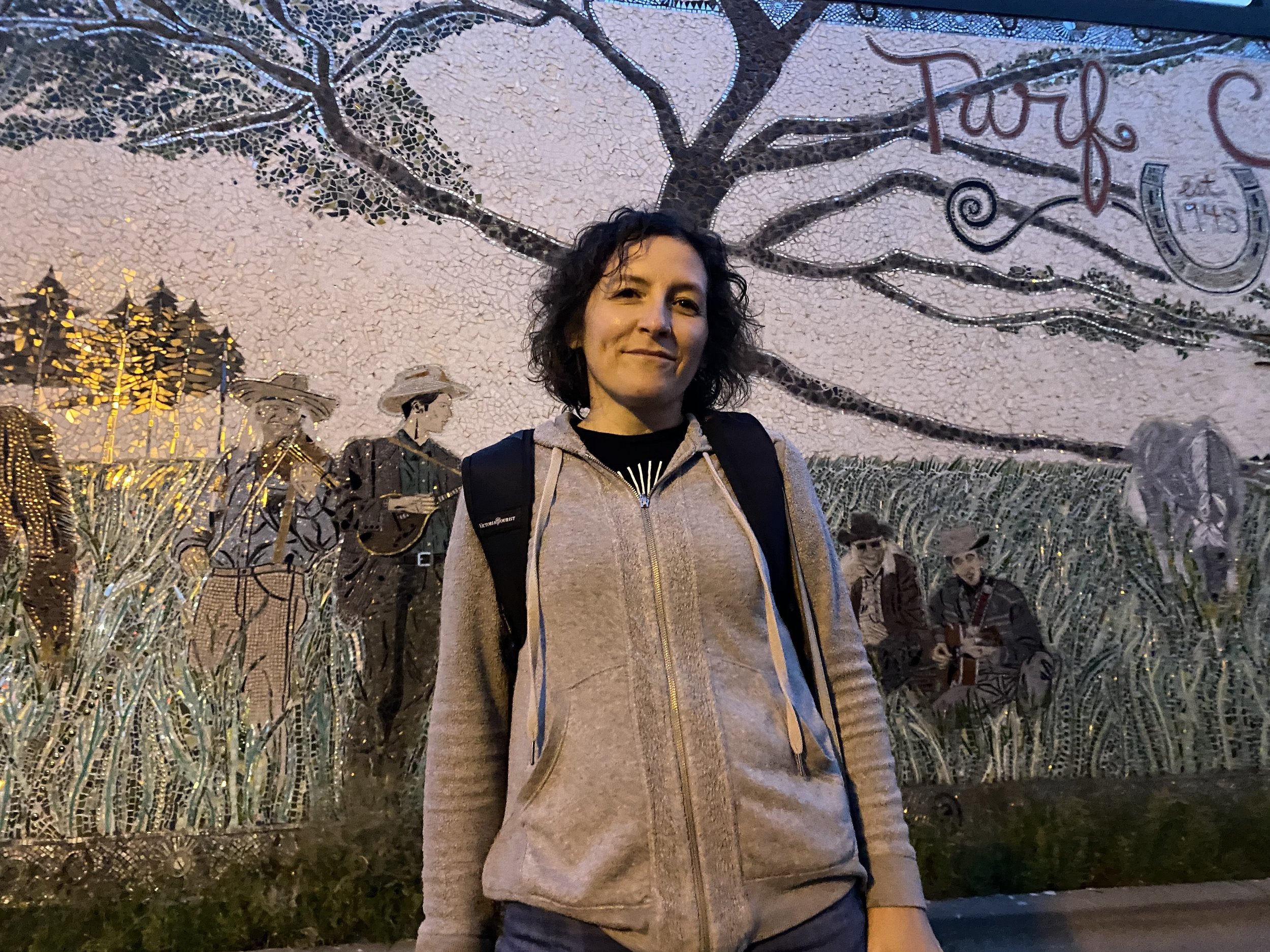
Carol Roth. Photo credit: Dan Lee.
Adventures in Americana co-founder Carol Roth is a novelist who publishes both under her name and the pseudonym T.A. Berkeley in a range of genres, from horror to thriller to YA. She loves to play guitar and sing and occasionally write songs. Her wide-ranging passions also include vegan cooking, personal finance, watching queer romance TV/movies and learning to speak Thai. By day she’s a marketing writer/brand strategist.