The Detroit artist talks about recording his new album and all things prewar blues.
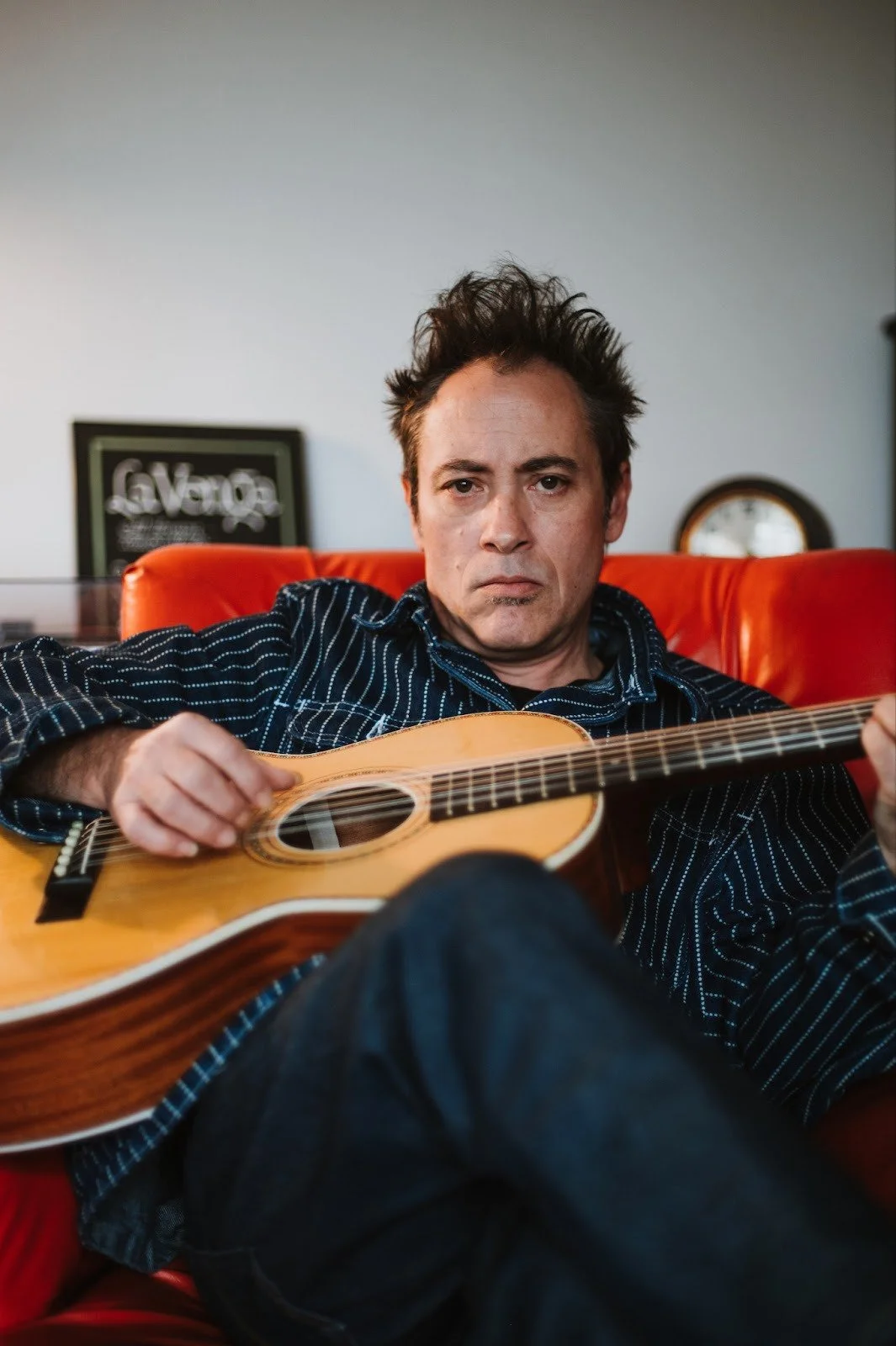
Todd Albright. Photo credit: Agnes Fischer.
For decades, Detroit-based 12-string guitarist Todd Albright has been bringing prewar blues to life on stage for new generations of music fans to fall in love with. His fourth album, Blues For Dexter Linwood—produced by and featuring Minnesota treasure Charlie Parr—came out in April 2026. It’s a collection of 11 songs by blues legends, delivered in Albright’s distinctive voice and style and recorded live in studio.
Albright came through Wisconsin and Minnesota this past month for a few shows, so we took the opportunity to ask him a few questions about his new album and his deep affinity for the blues.
Carol Roth: Blues for Dexter Linwood was recorded in mono on a single ribbon mic—pretty much the way it would’ve been done when these songs were first recorded a century ago. What did the session feel like—was it really different from your own past recording experiences? If so, how did it impact your performance or the outcome?
Todd Albright: Because of my immense hatred of being in a recording studio, Charlie and I approached this in a way that would most closely resemble what I do on stage, minus the audience. It was very different from past recording sessions that required extensive mixing of the final tracks, as that was done before we even pressed record. It was a much more comfortable way of doing things, less fussy, more to the point, with results that were immediately satisfying.
CR: The album is named after Dexter Linwood, the neighborhood you live in. What’s the connection between that place and this music for you? And is there something about Detroit that makes it a good home for prewar blues?
TA: There is a long history, especially in Jazz, of naming albums or songs after people or places, using the words “Blues for...”, and it’s kind of an honorific tradition. I’m honoring the place where I live.
I think the neighborhood deserves a little appreciation. We had Fortune Records here at the end of the street in the 1940s, and we’re not far from Motown. The area I live in was also important for Black history, specifically the Black Panther movement. The list of important historical facts goes on—the Nation of Islam Mosque No. 1 is here, Son House’s funeral was held in a church not far from here. It’s a very important place.
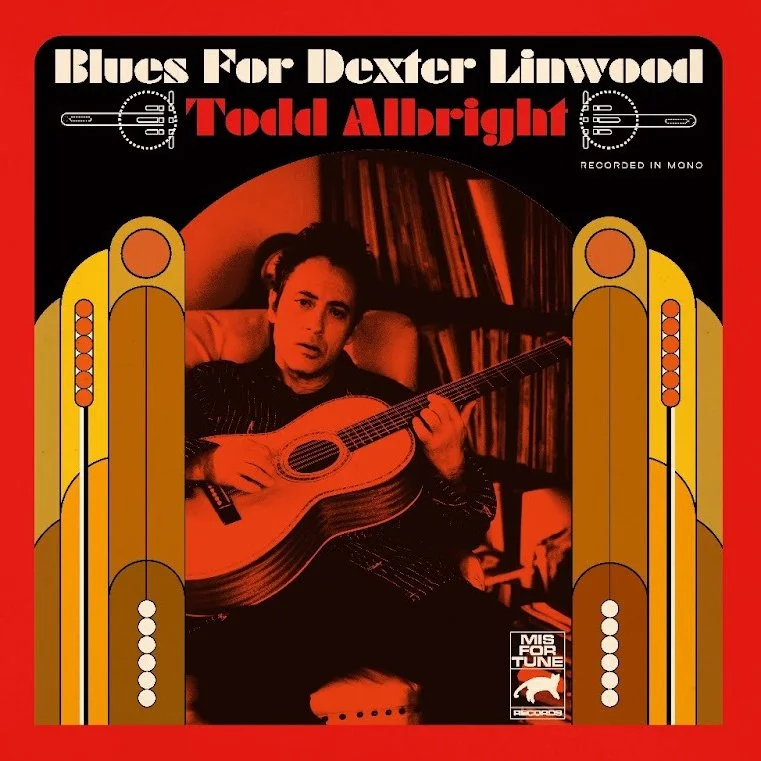
Todd Albright’s Blues for Dexter Linwood album artwork. Photo credit: Agnes Fischer.
CR: I’ve had the joy of seeing you play several times, and I’m not sure I’ve ever seen you play the same song twice. How many songs do you reckon you know, and how do you go about putting together a setlist?
TA: I try to know as many songs as it takes to get through the demands of a show. Whether it’s two sets or three sets, I never run short, but I don’t know how many songs I know. Things come in, things get forgotten about, songs are remembered years later and are brought back into the set list, if there was one. I don’t use a set list which kind of helps with playing songs by how the audience is reacting and how I’m feeling at that particular time, what the mood is. I try not to play more than four murder ballads in a row. Songs about prostitution seem to go over particularly well on Sundays.
CR: I always enjoy the tidbits of blues history you give between songs. What’s one of your favorite historical anecdotes?
TA: My favorite ones? Oh boy. Well, right now, my curiosity is in the world of pre-blues, and the songs that were written during the minstrel show period. These were songs that were written for those shows that ended up being some of the first recorded blues songs in the 1920s and 1930s. Songs like “I Got Mine,” “Ragtime Millionaire,” “My Money Never Runs Out” etc. were all written in the 1880s through the 1910s, and were kind of the bedrock of the first recorded blues because they were insanely popular songs.
CR: Are there any figures from prewar blues times that you think are underrated or underappreciated even in your circles?
TA: Just about everyone. All except for Robert Johnson, ha ha. That’s tough because, underrated by who? Those of us that are into this music rate all of these guys as high as possible. I wish they were better known by the public at large. But for those of us into it, they’re all gods to us. Pop musicians who have covered traditional country blues songs—the Eric Claptons, the Kurt Cobains—have only scratched the surface of what there is. It seems like the public didn’t, for the most part, bother to investigate any further. Which is kind of lousy due to the fact that this is the foundational music of America.
CR: I’m always excited to see new torchbearers of old blues music because that excitement and love of the genre is so palpable, and it’s encouraging to know it’s being carried on. Can you name a couple of favorite established or up-and-coming blues artists who you think are doing it especially well?
TA: I spend most of my time on the road, and I rarely cross paths with people who are playing this genre of music. Right now we are at a bit of a deficit having lost John Hammond, Roy Book Binder, and Paul Geremia. They’re dying off faster than they’re being birthed at this point.
But, there are still a few guys out there who are doing it at the highest level. One that comes to mind most immediately would be my pal Corey Harris, who’s been at this for decades. There are plenty of people who play the country blues, but you’ll never know their names. The music business doesn’t reward people who aren’t interested in commerce. They might be great players but they aren’t doing it for money, and the music business is an awful business to be in, so you’ll never know those people.
CR: There is something about the connection between prewar blues and contemporary musicians who play it that’s unlike any other. In studio recordings and especially in live performances, there’s just this love that flows out of them that’s infectious for the audience. What do you think it is about old blues that sparks such devotion in artists and pleasure in fans?
TA: It’s the people’s music. It’s the most honest music. The only thing that blues requires is honesty. That honesty goes right to the heart of the listener. You don’t have to guess at it. It hits you at a very visceral level, like getting punched in the nose—you don’t have a choice. One minute you’re fine, next minute, you’ve been hit and you’re reaching for a tissue to wipe the blood from your lip. And I mean that in the best possible way.
ABOUT THE AUTHOR

Carol Roth. Photo credit: Dan Lee.
Adventures in Americana co-founder Carol Roth is a novelist who publishes both under her name and the pseudonym T.A. Berkeley in a range of genres, from horror to thriller to YA. She loves to play guitar and sing and occasionally write songs. Her wide-ranging passions also include vegan cooking, personal finance, watching queer romance TV/movies and learning to speak Thai. By day she’s a marketing writer/brand strategist.