About That Song #113
In our special series, singer-songwriter Sarah Morris interviews artists about the songs that shaped them.
Hi! I’m Sarah Morris. I’m wildly in love with songs and the people who write them. There have been a few songs in my life that have been total gamechangers—songs that made me want to be a songwriter and songs I’ve written that made me feel like I am a songwriter. About That Song is a space where I can learn more about those pivotal songs in other writers’ lives.
In the 113th installment of this series, I connected with Sumanth Gopinath, who fronts the Americana band The Gated Community! The Minnesota group is beloved for gorgeous harmonies, multiple lead singers, and original songs that bring listeners together and point the way toward the kind of world that so many of us are longing to live in. As our friend Doyle Turner says, The Gated Community is “arms wide open.” We had a great chat about the songs and experiences that impacted Sumanth’s songwriting and musical journey.
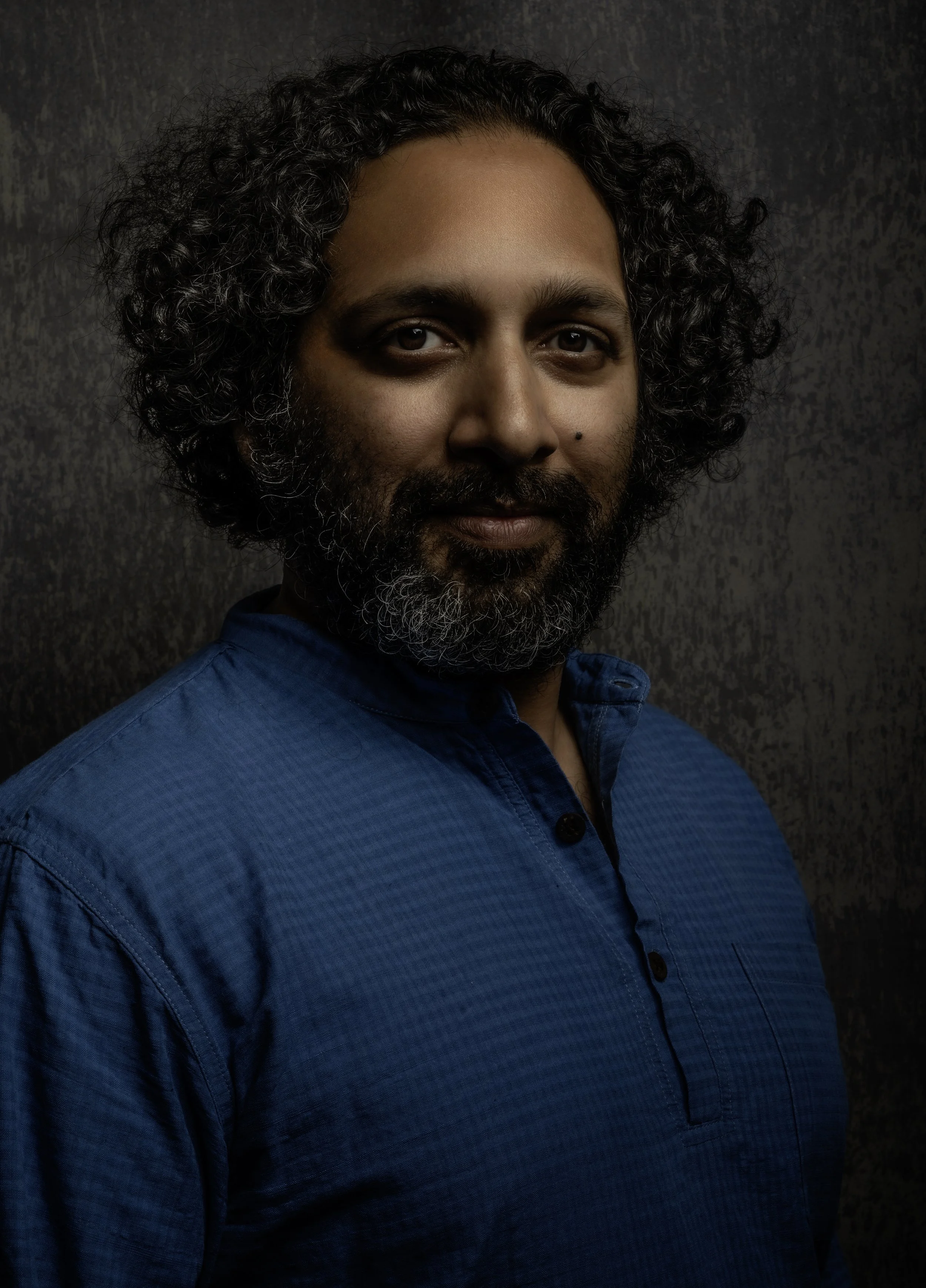
Sumanth Gopinath of The Gated Community. Photo credit: Darin Back.
Sarah: Hi Sumanth! Welcome to About That Song! You moved to Minneapolis in 2005 and, shortly thereafter, started The Gated Community, currently a 6-piece ensemble featuring yourself alongside Beth Hartman, Rosie Harris, Paul Hatlelid, Cody Johnson, and Nate Knutson. You’re about to celebrate its 20th anniversary as a “delightfully raucous country band” with a big show at Cedar Cultural Center. Two decades as a band is an incredible milestone, and—as I see it—a really lovely excuse to learn more about you and the songs that have been part of your journey.
Do you remember the song you heard that made you want to be a songwriter? Tell us about that song.
Sumanth: There are so many! I grew up obsessed with the Beatles, so many of their songs made me want to make my own songs (although the brilliance and sonic perfection of their music makes following in their footsteps a daunting task). I got more serious about songwriting in high school, and several different songs were big inspirations, including many on the Pixies’ album Doolittle, a slew of songs by R.E.M., and Tracy Chapman’s first album. Later on, I became a big Bob Dylan fan.
But in 2003, the person who really reconfigured my brain with respect to songwriting was Michael Hurley. I was introduced to Hurley by my friend and former bandmate Rob Slifkin, and I soon became extremely taken with many of Hurley’s songs, including “Eyes Eyes” (1971). The text is a series of short scenes, all of which end by repeating the word “eyes.” The first verse is: “Protein monster / ate a sack of poison sugar / crawling out of the barn to the weeds to die / rolling his eyes, eyes, eyes.” What does that even mean?!? (I wonder if this is a fantastical reference to protein monster balls or bars—did those exist in the 1960s and 1970s? I don’t think they did. I found an article describing discourse about the “protein gap” in the 1960s–70s, but honestly, I have no idea where this comes from, beyond Hurley’s unfathomable brain.)
Later on, Marilyn Monroe and Smokey the Bear appear, in different scenes. Musically, the song is a slow, lonesome country/folk tune, sometimes with these classical passages that make me think of centuries-old lute music. The melody is so poignant, and Hurley sings it movingly. I still don’t entirely understand why that song is so good, but it really is.
Sarah: Ooh! Michael Hurley is entirely new to me—thank you. The combination of the easy country-folk amble of the music with the hyper-specific and unexpected lyric is pretty darn compelling, and I could absolutely see how it might shine a light toward writing your own songs. Once you began writing, did you feel like a writer immediately? It took me a few years of writing before I believed it—was there a song that gave you that “a-HA! I AM a songwriter!” moment? Tell us about that song.
Sumanth: In some ways, I still don’t know if I’m a writer … even though I keep writing songs, so I must be!
Sarah: I like that very much—yes, you must be!
Sumanth: Even to this day, having written hundreds and hundreds of them, every time something comes into focus and starts to congeal into a song, it feels like luck. I know that an important moment happened around the same time as when I first listened to Michael Hurley (along with a slew of both classic and independent country and folk musicians, thanks to Rob’s mixtapes). Rob asked if I’d join his country band, called The Things Themselves, and I enthusiastically agreed to do so without really knowing anything about country music, aside from having gotten into the O Brother, Where Art Thou? soundtrack and Lucinda Williams a few years before then.
Anyway, I remember going to my parents’ house in Louisiana on a break of some kind, maybe Thanksgiving or Christmas, and I wrote a song called “On the Same Train,” which I sang while playing the piano. It had a nice sound; it sat well in my voice (something I struggled with when writing and singing rock songs for years), and as a song it was more compelling than just about anything I’d written previously. It gave me a sense of confidence and purpose in my songwriting that I’d previously lacked, and set me off on a still-ongoing journey of writing Americana/country/folk music.
Sarah: Finding the melodies that sit well in your voice—I remember experiencing that, too. A bit of “ohhhh, this is ME.” To have that occur as you traveled home (or at least to where your parents were) feels especially poignant.
Take us back to the beginning of The Gated Community—was there a song that you wrote where you realized this was the start of a new project? Or a song where you feel like you were finding your way into a writing voice that belonged to The Gated Community, rather than yourself?
Sumanth: The song that really got the band going was “Minnesota Brother.” I’d written part of it with my friend Tom Campbell (who is originally from Minnesota and wrote the initial lyrics for it) back in Connecticut, where we were both living. When I moved to MN in 2005, I revised the song (when it took the form it has on the album and currently). I showed it to Jason McGrath (faculty in Chinese film and literature at the University of Minnesota Twin Cities and a talented guitarist and avid country music listener), and he liked it; we then talked about forming a band together, which took place in early 2006, and The Gated Community was born.
“Minnesota Brother” was specifically local (it deals with the death of Paul Wellstone), and it is a serious, earnest song. (The Things Themselves were generally much more oriented towards novelty and humorous songs, and The Gated Community started out with some of the same material, but became much less of a novelty band after a few years.)
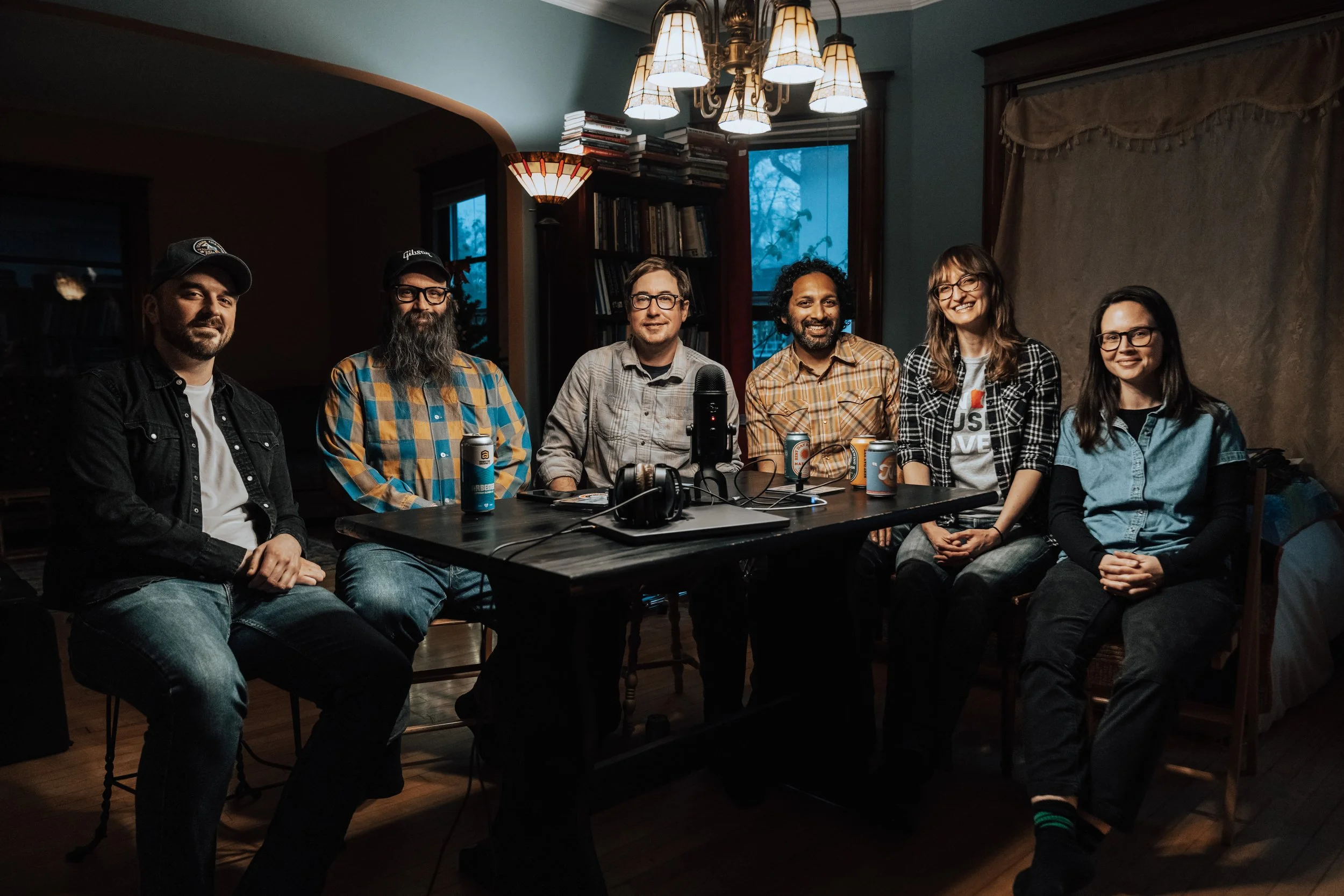
The Gated Community. Photo credit: Tom Smouse.
Sarah: Back in 2010, you released your debut album Power to My Friends. One of the songs that I kept coming back to was “Middlesex.” With a haunting melody, the lyrics lead us to an end where you advise, “Just recall, we’re all dying on our way to this world.” Can you tell us about that song? Did you write it inspired by the novel by Jeffrey Eugenides? That was such an epic read!
Sumanth: I’m so glad you like “Middlesex,” and yes, it was inspired by Eugenides’s novel! In fact, I sent it to him after it was recorded, and, amazingly, he replied, saying that he really liked it and that “We need more Indian-American bluegrass in this country.” That song was sung by a previous singer in the band, Katie Williams (who is the sister of Rosie Harris, current banjo player and singer). Interestingly, that line was a mishearing of a line from the 19th-c. folk song “The Dodger”: “we’re all a-dodging out our way through the world.” (I’d heard Spider John Koerner sing it around that time.) The melody is loosely based on “Wayfaring Stranger.”
Sarah: He wrote back! Good on him! Last summer, you released the album Goodbye Work—the title track carries listeners along with a foot-stomping, catchy-catchy melody and groove as you sing, “goodbye world, I am gone, toes are curled, and I can’t hold on”—what can you tell us about that song?
Sumanth: “Goodbye Work” began as a dream in May 2022, with me playing the piano and singing some of the lyrics, including the title words. When I finished writing it, I realized that it was about the tragedy of losing work, a prospect for so many people who try to survive the brutality of capitalism in our country. These days, with AI, stagnant economic growth, and, more recently, the expanded ICE raids and abductions, many people are losing their jobs and prospects for future employment in the US and beyond.
But the song also has a joyous tone, and that reflects the utopian possibility that maybe we wouldn’t have to work and could instead pursue the things we love to do. Musically, in my dream, it used the same chord progression as The Who’s “Baba O’Riley,” but I changed it to make it different (and improved it as a result). The middle section reminds me of the middle section of an earlier song of mine, “Wedding Dress.” In that line you mention, I’m pleased I was able to rhyme “world” with “curled” in a vivid, concrete way.
Sarah: I appreciate how that song carries big thematic weight in such a musically accessible way. Bravo. In April of this year, you released a three-song EP entitled Hope To Hell. Written in the thick of the tragedy of Metro Surge, the title song invites listeners to join in the chorus—to sing along, to demand a better future. Can you tell us about that song?
Sumanth: Early this year, after the effects of Operation Metro Surge began to be felt everywhere in the Twin Cities, and particularly after Renée Good’s murder, I began to write protest songs, like many of us in the music community did, to try to respond and do something about the horrors around us. I wrote four of them in total, three of which made it to the EP. “Hope to Hell” was the third of them, and I wrote it a week after Alex Pretti was murdered.
It came together incredibly quickly: I had the idea for the chorus on Saturday, Jan. 31 (the day after the Jan. 30 protest/march/strike), finished writing the song and making a full demo on Sunday, Feb. 1, we recorded it in the studio (at Future Condo Studio with John Miller) on Monday, Feb. 2 (while filming the video for it), and released it on Tuesday, Feb. 3. (The full EP appeared two months later.)
In terms of the song itself, this one expresses both world-weariness and resolve in response to our community being terrorized by federal agents. And, I also observed that a lot of anti-ICE political songs used the word “fuck”—especially per the “fuck ICE” chant—and noticed that my song didn’t do that, but instead used the much milder “hell” (which I later learned is apparently the most popular swear word in Minnesota).
Sarah: Ooh! 1) Thanks for the fun fact and 2) Wow! That is quite a turnaround. One of the benefits of the musical time we live in IS that we’re able to record and release music in that kind of timing, I think.
Sumanth: Musically, several people have described it as folk-rock, saying it reminds them of Crosby, Stills, Nash & Young; I don’t know who it reminds me of, but the comparison is flattering! And, most importantly, all of the proceeds from sales of the song and EP are going to immigrants’ rights and mutual aid organizations (thus far, we have given the money to MIRAC). The EP has raised over $3000, and as a band we’ve helped raise over $13K since January for MIRAC and other orgs. (The Hope to Hell donation campaign is still active, and it’s best to buy it on Bandcamp.)
Sarah: Oh, Sumanth—that is incredible. Thank you for doing that work. Before you go, can you tell us about THAT anniversary show? Cedar Cultural Center is such a special place, and twenty years is a big, awesome deal!
Sumanth: Thank you—we are so excited about the show! When we formed the band in early 2006, it was in my apartment in the Holtzermann building, across the street from the Cedar (where I lived for seven years), and it was always a dream of ours to play there—this is our first-ever show at the venue. It feels perfectly fitting to have our celebration at the Cedar, which we adore. And we’ll be having former band members and special guests joining us, about which we’re thrilled! The show itself will give attendees a sense of the history of the band, as we’ll be reviving old songs that we no longer perform, and doing this roughly in chronological order, to capture the feel of the band’s history and development. And, there will be a few moments for the whole cast to perform at once, which we hope will be energizing and cathartic. Can’t wait!
Sarah: Thank you so much for stopping by About That Song—I am wishing you and the rest of The Gated Community a fantastic show!
Go see The Gated Community at the Cedar Cultural Center in Minneapolis on Friday, September 18!
Listen to “Hope to Hell”
Hope To Hell Album Credits
Released April 3, 2026
The Gated Community is Sumanth Gopinath, Cody Johnson, Paul Hatlelid, Rosie Harris, Beth Hartman, and Nate Knutson
Music by The Gated Community, lyrics by Sumanth Gopinath
produced by The Gated Community and John Miller
recorded at Future Condo Studio by John Miller
mixed by John Miller
mastered by John Miller
photography by Mark Nye, art by Ian Rans
full track information available at thegatedcommunity.bandcamp.com
contact us at thegatedcommunity@gmail.com
thanks and much love to our families, friends, and fans
All proceeds from this recording will go to one or more organizations resisting the occupation of our cities by ICE and providing aid to our community. Everyone involved generously volunteered their time and resources to this project.
Thank you to Tom Campbell, Eva Cohen, Carl and Ina Elliott, Jim and Sara Harris, Marcus dePaula, Michael Gallope, Gabrielle Gopinath, John Miller, Mark Nye, Daniel Owens, Matt Rahaim, Ian Rans, Ellen Stanley, Ryan Stokes, Dean Von Bank, and our families, friends, and neighbors.
ABOUT THE AUTHOR

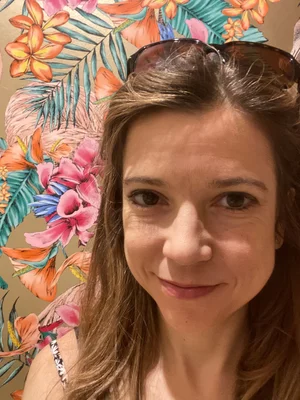
Sarah Morris. Photo credit: Tom Smouse.
Sarah Morris is a superfan of songs and the people who write them, and a believer that certain songs can change your life. A singer-songwriter / mama / bread maker / coffee drinker who recently released her fifth album of original material, she’s been known to joyfully sing with people in her Big Green Bathroom.